
Cardio, also known as cardiovascular exercise, is one of the most effective ways to improve your overall health and fitness. Whether you enjoy running, cycling, brisk walking, swimming, dancing, or jumping rope, regular cardio workouts help strengthen your heart, increase endurance, burn calories, and improve mental well-being.
Many people associate cardio only with weight loss, but the benefits of cardio go far beyond burning calories. It supports heart health, improves lung function, boosts energy levels, enhances mood, and even reduces the risk of chronic diseases. Whether you’re an athlete, a beginner, or someone simply looking to stay active, incorporating cardio into your weekly routine can have long-lasting health benefits.
One of the best things about cardio is that it doesn’t require expensive equipment or a gym membership. Activities like walking, jogging, climbing stairs, or cycling outdoors are simple yet highly effective forms of cardiovascular exercise. Consistency matters more than intensity, making cardio suitable for people of all fitness levels.
In this guide, you’ll discover the benefits of cardio, learn why it’s important for your body and mind, and understand how regular cardio can help you achieve your fitness goals while supporting a healthier lifestyle.
What Is Cardio?
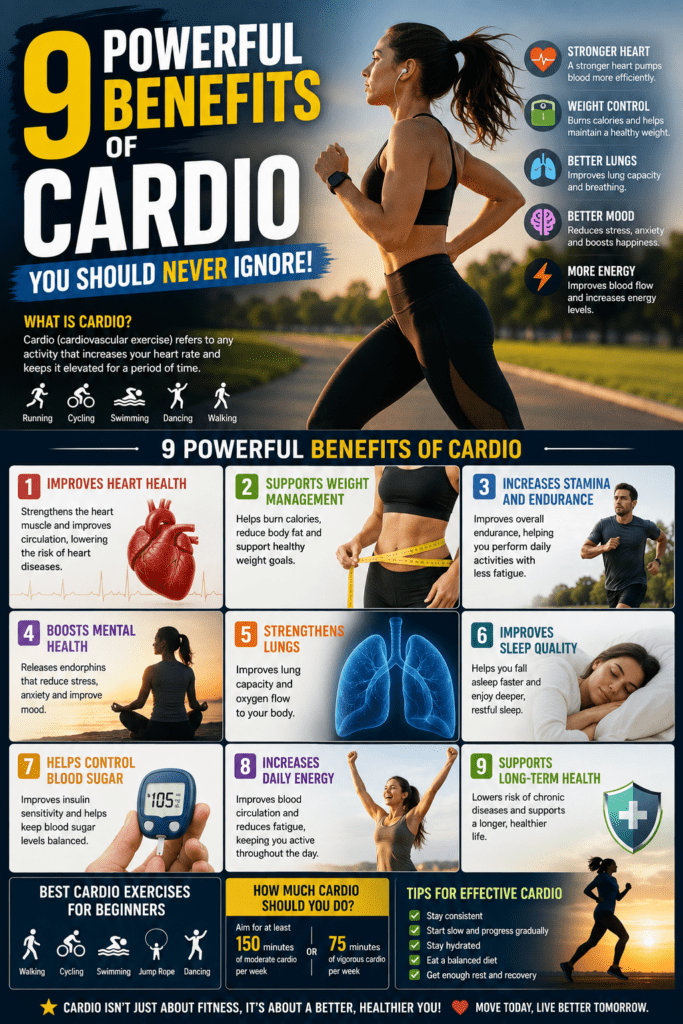
Cardio, short for cardiovascular exercise, refers to any physical activity that increases your heart rate and breathing for an extended period. During cardio exercise, your heart pumps more oxygen-rich blood to your muscles, helping them work efficiently while strengthening your cardiovascular system.
Some popular cardio exercises include:
- Walking
- Running
- Cycling
- Swimming
- Jump rope
- Dancing
- Hiking
- Rowing
- Stair climbing
- HIIT (High-Intensity Interval Training)
The goal of cardio is to keep your body moving continuously, improving both endurance and heart health over time.
Why Is Cardio Important?
Your heart is a muscle, and like every other muscle in your body, it becomes stronger with regular exercise. One of the biggest benefits of cardio is that it improves how efficiently your heart and lungs work together.
Regular cardio helps your body deliver oxygen more effectively, allowing you to perform daily activities with less fatigue. It also supports healthy blood circulation, strengthens your immune system, and contributes to better physical and mental health.
People who perform regular cardiovascular exercise often experience increased energy, improved mood, and better overall fitness compared to those with a sedentary lifestyle.
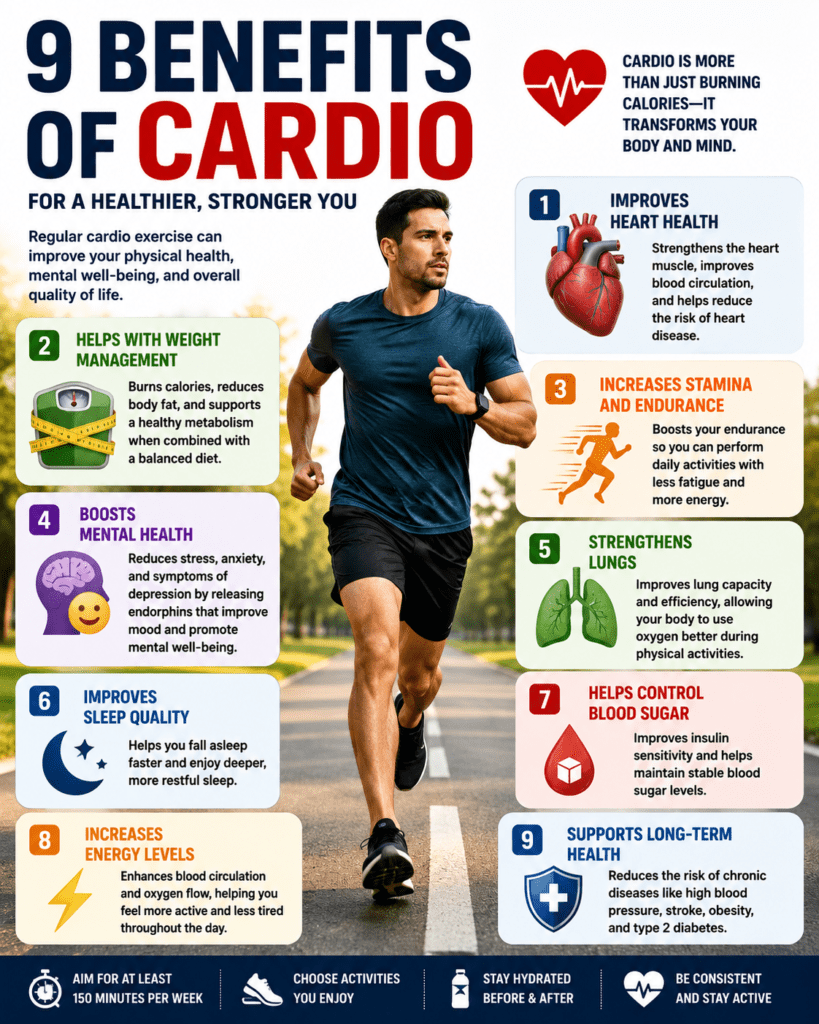
9 Powerful Benefits of Cardio
1. Improves Heart Health
One of the most well-known benefits of cardio is a healthier heart.
Cardio exercises strengthen the heart muscle, allowing it to pump blood more efficiently throughout the body. Better circulation means your organs and muscles receive the oxygen and nutrients they need to function properly.
Regular cardiovascular exercise may also help support healthy blood pressure and cholesterol levels when combined with a balanced diet and healthy lifestyle.
For long-term wellness, maintaining heart health should be a priority, and cardio is one of the simplest ways to achieve that goal.
2. Supports Healthy Weight Management
Another major benefit of cardio is helping maintain a healthy body weight.
During cardio workouts, your body burns calories to produce energy. Combined with proper nutrition, regular cardio can support weight management by increasing daily calorie expenditure.
Different cardio activities burn different amounts of calories depending on their intensity and duration. Walking, jogging, cycling, and swimming all contribute to a healthy and active lifestyle.
Remember that sustainable weight management depends on consistent exercise and healthy eating habits rather than quick fixes.
3. Increases Stamina and Endurance
Have you ever noticed that climbing stairs or carrying groceries becomes easier after exercising regularly?
That’s because one of the biggest benefits of cardio is improved endurance.
As your cardiovascular fitness improves, your body becomes more efficient at delivering oxygen to working muscles. This allows you to perform physical activities for longer periods without becoming tired as quickly.
Whether you’re training for sports, preparing for a marathon, or simply trying to stay active, increased stamina helps improve both athletic performance and everyday life.
4. Boosts Mental Health
The benefits of cardio are not limited to physical fitness—they also extend to mental well-being.
Physical activity stimulates the release of endorphins, often called the body’s “feel-good” hormones. These natural chemicals help improve mood and reduce feelings of stress.
Many people find that a brisk walk, a bike ride, or a short run helps them clear their minds and feel more refreshed.
Regular cardio can also improve confidence by helping individuals feel stronger, healthier, and more energetic.
5. Strengthens Lung Function
Healthy lungs are essential for maintaining an active lifestyle.
During cardio exercise, your breathing rate naturally increases to supply more oxygen to your muscles. Over time, this helps improve your body’s ability to use oxygen more efficiently.
One of the valuable benefits of cardio is better respiratory endurance, making activities such as walking, hiking, cycling, and sports feel less physically demanding.
Improved lung efficiency also supports better overall fitness and athletic performance.
6. Improves Sleep Quality
Regular physical activity has been linked to better sleep quality for many people.
Completing cardio workouts during the day can help your body relax naturally by bedtime, making it easier to fall asleep and stay asleep.
Good-quality sleep supports muscle recovery, improves concentration, and helps maintain healthy energy levels throughout the day.
When combined with a consistent sleep schedule and healthy habits, cardio can become an important part of an overall wellness routine.
7. Helps Support Healthy Blood Sugar Levels
One of the lesser-known benefits of cardio is its role in supporting healthy blood sugar management.
During exercise, your muscles use glucose as a source of energy. Regular physical activity also improves your body’s ability to respond to insulin more effectively.
For many people, combining cardio with a balanced diet and strength training supports long-term metabolic health.
However, anyone with diabetes or another medical condition should follow advice from their healthcare professional before starting a new exercise program.
8. Increases Daily Energy Levels
It may seem surprising, but exercising regularly often leaves people feeling more energetic rather than more tired.
As your cardiovascular fitness improves, your body becomes more efficient at producing and using energy.
Many individuals notice that regular cardio helps reduce daytime fatigue while making everyday activities feel easier and less exhausting.
This is one of the practical benefits of cardio that positively affects both work productivity and daily life.
9. Supports Long-Term Health
Perhaps the greatest of all the benefits of cardio is its contribution to long-term health and overall quality of life.
Regular cardiovascular exercise supports healthy aging by improving mobility, maintaining physical fitness, strengthening the heart, and encouraging an active lifestyle.
Combined with healthy eating, proper hydration, quality sleep, and strength training, cardio forms one of the foundations of lifelong wellness.
Making cardio a regular habit today can help you stay healthier and more active for years to come.
Best Cardio Exercises for Beginners
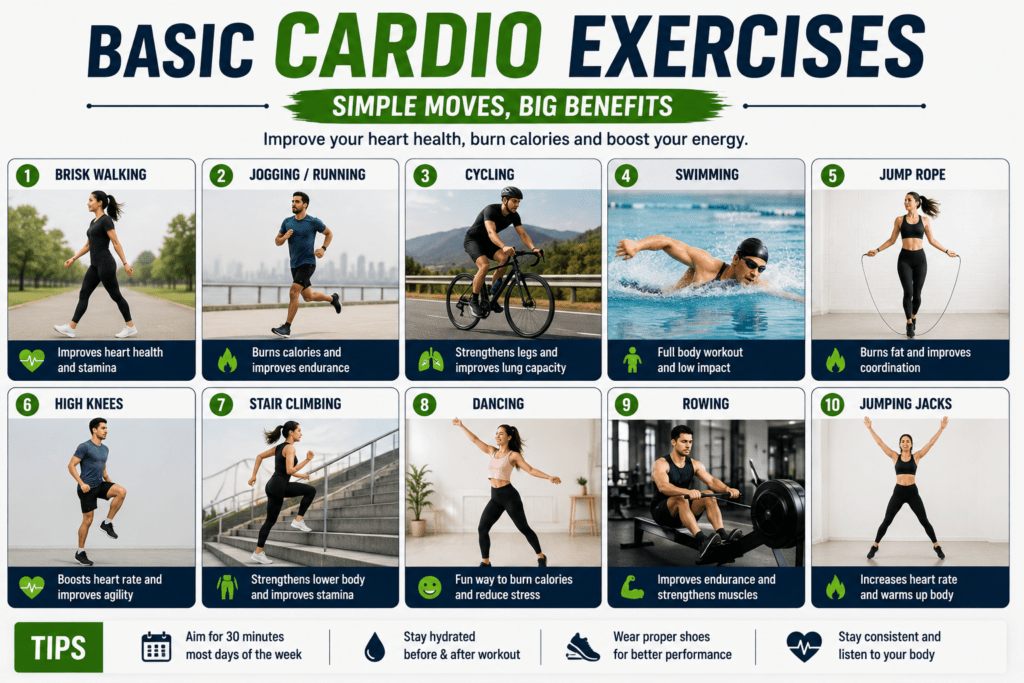
If you’re new to fitness, choosing the right exercise is important. One of the biggest benefits of cardio is that you don’t need expensive equipment or advanced skills to get started. Here are some beginner-friendly cardio exercises that are effective and easy to include in your daily routine.
1. Brisk Walking
Walking is one of the safest and most accessible forms of cardio. A 30-minute brisk walk can improve heart health, burn calories, and increase stamina without placing too much stress on your joints.
2. Cycling
Cycling is a low-impact cardio exercise that strengthens your legs while improving cardiovascular fitness. It is suitable for beginners and people who prefer outdoor workouts or stationary bikes.
3. Swimming
Swimming provides a full-body workout while being gentle on the joints. It helps improve endurance, muscle strength, and lung capacity.
4. Jump Rope
Jump rope is a simple yet highly effective cardio exercise that improves coordination, burns calories, and increases heart rate in a short amount of time.
5. Dancing
Dancing is an enjoyable way to stay active while improving cardiovascular fitness. Whether you join a dance class or exercise at home, it’s a fun way to experience the benefits of cardio.
6. Jogging
Once you’ve built some endurance, jogging can further improve heart health, stamina, and calorie burn. Start slowly and increase your pace gradually.
5 Common Cardio Mistakes You Should Avoid
Although cardio offers many health benefits, certain mistakes can reduce its effectiveness or increase the risk of injury.
1. Skipping the Warm-Up
Starting intense exercise without warming up can increase the risk of muscle strains and joint discomfort. Spend 5–10 minutes doing light movement and dynamic stretches before every workout.
2. Doing Too Much Cardio
More isn’t always better. Excessive cardio without enough recovery can lead to fatigue, overtraining, and reduced performance. Balance cardio with strength training and rest days.
3. Ignoring Proper Hydration
One of the easiest mistakes to make is not drinking enough water before, during, and after exercise. Staying hydrated supports endurance, recovery, and overall performance.
4. Using Poor Exercise Form
Incorrect running, cycling, or jumping technique may place unnecessary stress on your joints and muscles. Focus on proper posture and controlled movement.
5. Forgetting Recovery
Your body needs time to recover after exercise. Getting enough sleep, eating nutritious meals, and allowing recovery days help you continue enjoying the benefits of cardio.
How Much Cardio Should You Do?
The amount of cardio you need depends on your age, fitness level, and personal goals.
For most healthy adults, experts generally recommend:
- 150 minutes of moderate-intensity cardio per week, such as brisk walking or cycling.
OR
- 75 minutes of vigorous-intensity cardio per week, such as running or high-intensity interval training (HIIT).
You can also combine moderate and vigorous activities throughout the week.
For beginners, start with 20–30 minutes, three to five times per week, and gradually increase the duration and intensity as your fitness improves.

Cardio vs Strength Training: Which Is Better?
Many people wonder whether cardio or strength training is more important.
The truth is that both play different but equally valuable roles.
Cardio primarily improves heart health, endurance, and calorie burning, while strength training focuses on building muscle, increasing bone strength, and improving metabolism.
Instead of choosing one over the other, combining both types of exercise provides the best overall fitness results.
A balanced weekly routine that includes cardio, strength training, flexibility exercises, and recovery days supports long-term health and performance.
Final Thoughts
The benefits of cardio extend far beyond improving fitness or burning calories. Regular cardiovascular exercise strengthens your heart, increases stamina, supports healthy weight management, improves mood, enhances sleep quality, and contributes to better overall health.
The best part is that cardio is suitable for almost everyone. Whether you enjoy walking, cycling, swimming, dancing, or jogging, choosing an activity you genuinely enjoy makes it easier to stay consistent.
At Legendbolt, we believe that lasting fitness comes from simple, sustainable habits. By making cardio a regular part of your weekly routine and combining it with healthy nutrition, proper hydration, and adequate rest, you can build a stronger body, improve your overall well-being, and enjoy an active lifestyle for years to come.
Frequently Asked Questions (FAQs)
1. What are the main benefits of cardio?
The biggest benefits of cardio include improved heart health, better endurance, healthy weight management, increased energy levels, stronger lungs, and improved mental well-being.
2. Is cardio good for weight loss?
Yes. Cardio helps burn calories and supports weight management when combined with a balanced diet and regular physical activity.
3. How often should I do cardio?
Most adults should aim for at least 150 minutes of moderate-intensity cardio or 75 minutes of vigorous-intensity cardio each week.
4. Which cardio exercise is best for beginners?
Walking, cycling, swimming, and dancing are excellent beginner-friendly options because they are easy to perform and can be adjusted to different fitness levels.
5. Should I do cardio before or after strength training?
It depends on your goal. If improving endurance is your priority, do cardio first. If building muscle and strength is your main goal, complete your strength workout before cardio.
6. Can I do cardio every day?
Yes, if you vary the intensity and allow your body enough time to recover. Mixing light, moderate, and vigorous sessions can help prevent overtraining while supporting long-term fitness.