
Every successful athlete knows that training alone isn’t enough to achieve peak performance. A well-balanced diet is just as important as regular exercise because it provides the energy, nutrients, and recovery support your body needs. Whether you’re a professional athlete, a fitness enthusiast, or someone who enjoys recreational sports, following the right athlete diet plan can help improve endurance, build strength, speed up recovery, and reduce the risk of injuries.
Many people believe that athletes only need to eat more food, but quality matters far more than quantity. A healthy diet should include the right balance of carbohydrates, protein, healthy fats, vitamins, minerals, and plenty of fluids. These nutrients work together to fuel workouts, repair muscles, strengthen bones, and support overall health.
Every sport places different demands on the body. For example, long-distance runners require sustained energy, while weightlifters need enough protein to support muscle growth. However, the foundation of every athlete diet plan remains the same—a balanced and nutrient-rich eating pattern that supports performance and recovery.
In this guide, you’ll learn what an athlete diet plan should include, why nutrition matters, the essential nutrients every athlete needs, and practical tips to help you perform at your best.
What Is an Athlete Diet Plan?
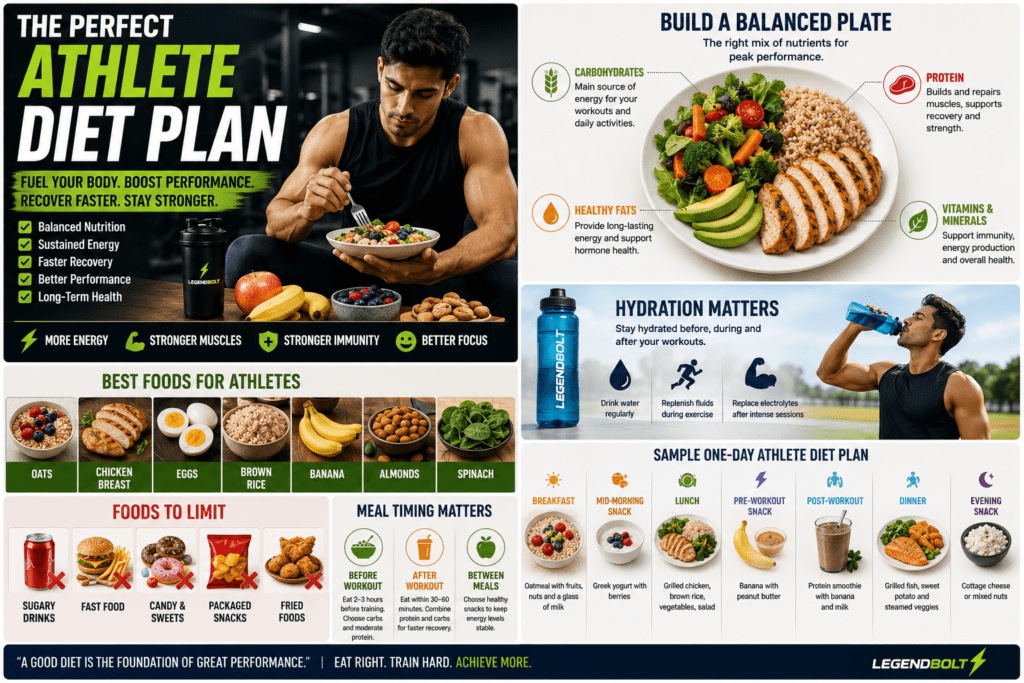
An athlete diet plan is a structured eating plan designed to provide the right amount of nutrients before, during, and after physical activity. Its purpose is to fuel the body, improve athletic performance, promote faster recovery, and maintain overall health.
Unlike fad diets or restrictive meal plans, an athlete diet focuses on balance. It includes a variety of whole foods that provide carbohydrates for energy, protein for muscle repair, healthy fats for long-lasting fuel, and vitamins and minerals that support body functions.
A good diet plan should also consider factors such as:
- Age
- Gender
- Body weight
- Activity level
- Training intensity
- Type of sport
- Fitness goals
Since every athlete has different nutritional needs, there is no single meal plan that works for everyone. The goal is to create healthy eating habits that support both performance and long-term wellness.
Why Is an Athlete Diet Plan Important?
Food is the body’s primary source of fuel. Without proper nutrition, even the best training program cannot deliver optimal results.
Following a healthy athlete diet plan offers several important benefits:
- Provides energy for training and competition.
- Supports muscle growth and recovery.
- Reduces fatigue during exercise.
- Strengthens the immune system.
- Helps maintain a healthy body weight.
- Improves concentration and mental focus.
- Reduces the risk of injuries and nutrient deficiencies.
Athletes who consistently eat nutritious meals often recover faster and perform more effectively than those with poor eating habits.
Essential Nutrients Every Athlete Needs
A successful athlete diet plan should include all major nutrients in the right proportions. Each nutrient has a unique role in supporting athletic performance.
1. Carbohydrates – The Main Energy Source
Carbohydrates are the body’s preferred source of energy, especially during moderate and high-intensity exercise.
When you consume carbohydrates, your body converts them into glucose, which is stored as glycogen in the muscles and liver. During exercise, glycogen provides the energy needed for movement.
Healthy carbohydrate sources include:
- Brown rice
- Oats
- Whole wheat bread
- Sweet potatoes
- Bananas
- Apples
- Whole-grain pasta
- Quinoa
Choosing complex carbohydrates instead of highly processed foods helps provide steady energy throughout the day.
2. Protein – Supports Muscle Growth and Recovery
Protein is essential for repairing muscle tissue after workouts and supporting muscle development.
A balanced athlete diet plan should include high-quality protein sources throughout the day instead of consuming all protein in one meal.
Healthy protein options include:
- Chicken breast
- Eggs
- Fish
- Greek yogurt
- Cottage cheese
- Lentils
- Beans
- Tofu
- Soy products
- Milk
Including protein after exercise can help your muscles recover more efficiently.
3. Healthy Fats – Long-Lasting Energy
Healthy fats are often misunderstood, but they are an important part of every athlete diet plan.
They provide long-lasting energy, support hormone production, help absorb vitamins, and contribute to brain health.
Good sources include:
- Avocados
- Almonds
- Walnuts
- Chia seeds
- Flaxseeds
- Olive oil
- Peanut butter
- Fatty fish such as salmon
Instead of avoiding fats completely, athletes should focus on choosing healthier sources while limiting trans fats and highly processed foods.
4. Vitamins and Minerals
Micronutrients play a major role in supporting athletic performance even though they are needed in smaller amounts.
Some important nutrients include:
- Calcium for strong bones.
- Vitamin D to support calcium absorption.
- Iron for oxygen transport.
- Magnesium for muscle function.
- Potassium for fluid balance.
- Vitamin C to support immunity.
- B Vitamins for energy production.
Eating a colorful variety of fruits and vegetables helps ensure your body receives these important nutrients naturally.
5. Hydration
Hydration is one of the most overlooked parts of an athlete diet plan.
During exercise, the body loses fluids through sweat. Failing to replace those fluids can reduce endurance, slow recovery, and negatively affect performance.
Athletes should:
- Drink water consistently throughout the day.
- Hydrate before training.
- Sip fluids during longer workouts.
- Replace fluids after exercise.
- Consider electrolyte-rich drinks during prolonged or intense sessions.
Maintaining proper hydration supports muscle function, regulates body temperature, and keeps energy levels stable.
10 Powerful Athlete Diet Plan Tips
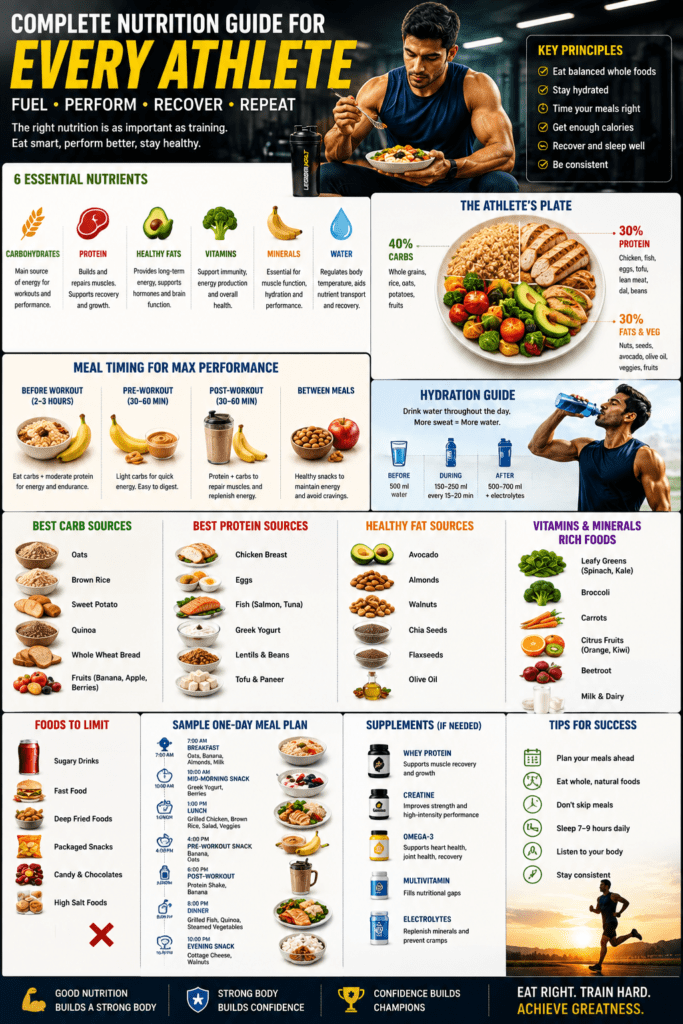
1. Eat Balanced Meals
Every meal should include carbohydrates, protein, healthy fats, vegetables, and fruits.
Balanced meals provide a steady supply of nutrients that support training, recovery, and overall health.
2. Never Skip Breakfast
Breakfast replenishes energy stores after an overnight fast.
A nutritious breakfast may include oatmeal with fruit, eggs with whole-grain toast, or yogurt with nuts and berries.
Starting the day with a healthy meal helps prepare your body for training and daily activities.
3. Choose Complex Carbohydrates
Instead of relying on sugary snacks or processed foods, choose complex carbohydrates that provide long-lasting energy.
Excellent choices include:
- Brown rice
- Oats
- Whole grains
- Sweet potatoes
- Whole wheat pasta
These foods help maintain consistent energy levels during exercise.
4. Include Protein in Every Meal
One of the simplest ways to improve an athlete diet plan is by including protein in every meal.
Protein supports muscle repair, recovery, and growth while helping you feel satisfied between meals.
Good options include lean meats, eggs, dairy products, legumes, tofu, and fish.
5. Eat Plenty of Fruits and Vegetables
Fruits and vegetables provide essential vitamins, minerals, antioxidants, and fiber.
Including a variety of colorful produce every day supports recovery, strengthens immunity, and promotes overall health.
Aim to fill at least half your plate with fruits and vegetables whenever possible.
6. Stay Hydrated Throughout the Day
Hydration is just as important as eating nutritious food. A complete athlete diet plan should always include enough water and fluids to replace what your body loses through sweat during training.
Even mild dehydration can reduce endurance, affect concentration, and slow recovery. Athletes should drink water consistently throughout the day instead of waiting until they feel thirsty.
For long training sessions lasting more than an hour, electrolyte-rich drinks may also help replace important minerals lost through sweat.
7. Time Your Meals Properly
Meal timing can significantly affect athletic performance.
Eating the right foods before and after exercise gives your body the energy it needs for training while supporting muscle recovery afterward.
Before Exercise:
- Eat 2–3 hours before training.
- Choose carbohydrate-rich foods with moderate protein.
- Avoid heavy or greasy meals.
After Exercise:
- Eat within 30–60 minutes after your workout.
- Combine protein and carbohydrates to replenish energy stores and repair muscles.
Good post-workout meals include grilled chicken with rice, Greek yogurt with fruit, or a protein smoothie with bananas.
8. Choose Healthy Snacks
Healthy snacks help maintain energy levels between meals and prevent overeating later in the day.
Some excellent snack options for an athlete diet plan include:
- Mixed nuts
- Greek yogurt
- Fresh fruit
- Peanut butter with whole-grain toast
- Cottage cheese
- Boiled eggs
- Protein smoothies
Nutritious snacks provide sustained energy without relying on processed foods.
9. Limit Processed and Sugary Foods
One of the biggest mistakes athletes make is relying on fast food and sugary snacks.
Highly processed foods often contain excessive sugar, unhealthy fats, and sodium while providing very little nutritional value.
Although occasional treats are perfectly fine, the majority of an athlete diet plan should consist of whole, nutrient-rich foods that support training and recovery.
10. Be Consistent with Your Diet
Healthy eating isn’t about following a strict diet for a few weeks.
The best athlete diet plan is one that you can maintain consistently throughout the year.
Eating balanced meals every day provides your body with the nutrients it needs to perform well, recover efficiently, and stay healthy over the long term.
Small healthy habits repeated consistently produce better results than short-term extreme diets.
Best Foods to Include in an Athlete Diet Plan
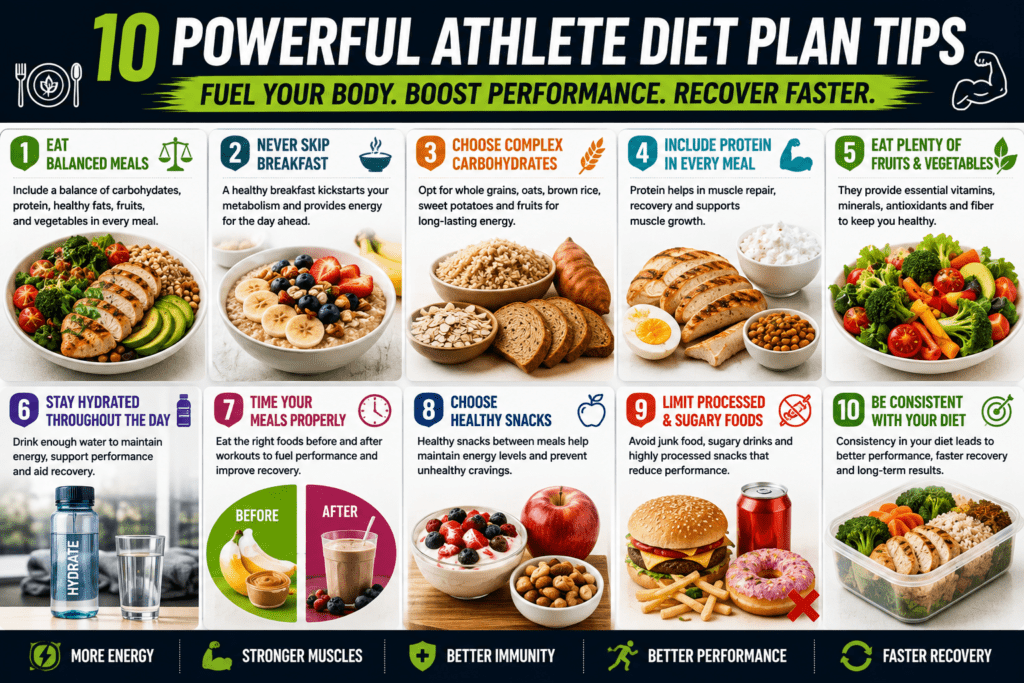
Choosing nutrient-dense foods is one of the easiest ways to improve athletic performance.
Healthy Carbohydrates
- Brown rice
- Oats
- Sweet potatoes
- Whole-grain bread
- Whole-wheat pasta
- Quinoa
High-Quality Protein
- Chicken breast
- Fish
- Eggs
- Greek yogurt
- Cottage cheese
- Lentils
- Beans
- Tofu
Healthy Fats
- Avocados
- Almonds
- Walnuts
- Chia seeds
- Flaxseeds
- Olive oil
Fruits and Vegetables
- Bananas
- Apples
- Oranges
- Berries
- Spinach
- Broccoli
- Carrots
- Tomatoes
These foods provide the energy, protein, vitamins, and minerals needed to support an active lifestyle.
Foods Athletes Should Limit
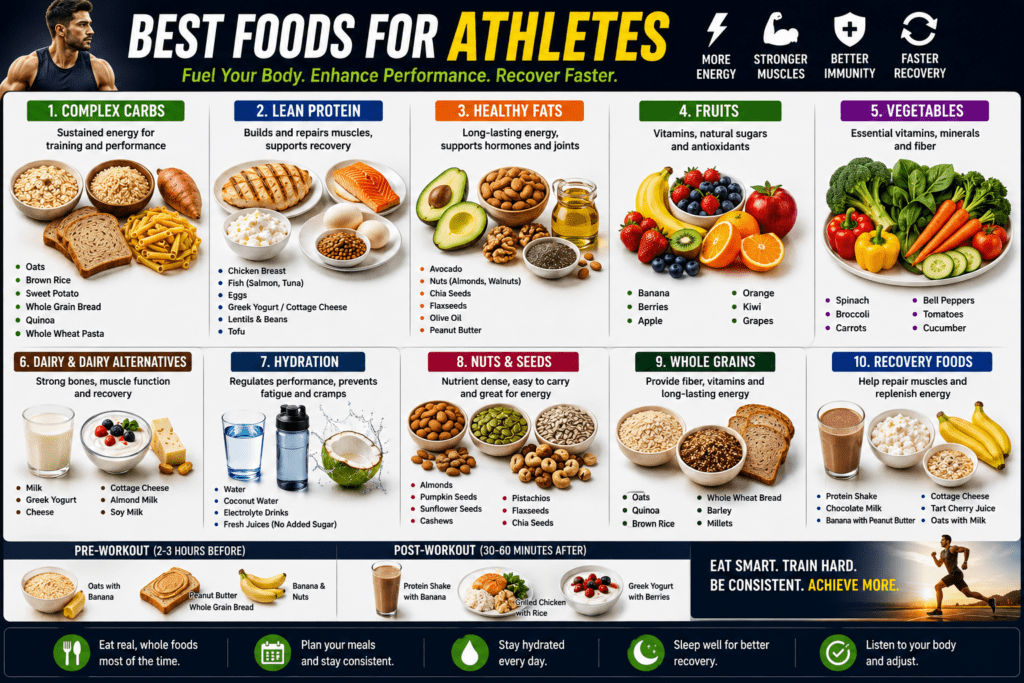
A healthy athlete diet plan doesn’t require eliminating all treats, but some foods should be eaten only occasionally.
Try to limit:
- Sugary soft drinks
- Deep-fried foods
- Packaged snacks
- Candy
- Pastries
- Processed meats
- Excess alcohol
- Highly processed fast food
Replacing these foods with healthier alternatives supports better energy levels and recovery.
Sample One-Day Athlete Diet Plan
Breakfast
- Oatmeal with banana and almonds
- Two boiled eggs
- A glass of milk
Morning Snack
- Greek yogurt
- Mixed berries
Lunch
- Grilled chicken breast
- Brown rice
- Mixed vegetables
- Fresh salad
Pre-Workout Snack
- Banana
- Peanut butter on whole-grain toast
Post-Workout
- Protein smoothie with milk, banana, and oats
Dinner
- Grilled fish or tofu
- Sweet potato
- Steamed broccoli
Evening Snack
- Cottage cheese or a handful of mixed nuts
This balanced meal plan provides carbohydrates for energy, protein for recovery, healthy fats for sustained fuel, and plenty of vitamins and minerals.
5 Common Athlete Diet Plan Mistakes to Avoid
Even dedicated athletes can make nutrition mistakes that affect performance.
1. Skipping Meals
Skipping meals may reduce energy levels and limit recovery after training.
2. Eating Too Little Protein
Without enough protein, muscles recover more slowly after exercise.
3. Ignoring Hydration
Not drinking enough water can reduce endurance and increase fatigue.
4. Depending Too Much on Supplements
Supplements should complement a healthy diet—not replace nutritious whole foods.
5. Following Extreme Diets
Very restrictive diets may lead to nutrient deficiencies and reduced sports performance.
Final Thoughts
Following a well-balanced athlete diet plan is one of the smartest investments you can make in your health and performance. Nutritious meals provide the energy needed for training, support muscle recovery, strengthen immunity, and help reduce the risk of injuries.
Remember that no single food can transform athletic performance overnight. Instead, success comes from consistently choosing balanced meals, staying hydrated, eating enough protein, and fueling your body with wholesome foods every day.
At Legendbolt, we believe that proper nutrition is the foundation of every successful athlete. Combined with regular exercise, quality sleep, and a positive mindset, a healthy athlete diet plan can help you perform better, recover faster, and achieve your long-term fitness goals.
Frequently Asked Questions (FAQs)
1. What is the best athlete diet plan?
The best athlete diet plan includes balanced meals with carbohydrates, protein, healthy fats, fruits, vegetables, and adequate hydration to support energy, recovery, and overall health.
2. How much protein should athletes eat?
Protein needs vary depending on training intensity, body weight, and sport. Most athletes benefit from including a quality protein source with every meal.
3. Are carbohydrates important for athletes?
Yes. Carbohydrates are the body’s primary source of energy during exercise and should be an essential part of every athlete diet plan.
4. Should athletes take supplements?
Whole foods should always come first. Supplements may be helpful in certain situations, but they should only complement a balanced diet and, when appropriate, be used with professional guidance.
5. What should athletes eat before a workout?
A meal containing complex carbohydrates and moderate protein eaten 2–3 hours before exercise can help provide sustained energy during training.
6. What should athletes eat after exercise?
A combination of protein and carbohydrates after a workout helps replenish energy stores and supports muscle recovery.
7. Why is hydration important in an athlete diet plan?
Proper hydration supports body temperature regulation, muscle function, endurance, recovery, and overall athletic performance.