
Starting a fitness journey can feel confusing. With countless workout plans, diet trends, and exercise routines available online, many beginners don’t know where to begin. That’s where the 3-3-3 Rule for Fitness comes in. It offers a simple and practical approach that helps people stay active without feeling overwhelmed.
The 3-3-3 Rule for Fitness is not a strict scientific formula but a popular fitness method used by many trainers to build consistency. While different coaches explain the rule in slightly different ways, the most common interpretation is performing 3 strength exercises, 3 cardio exercises, and 3 flexibility or mobility exercises in your weekly fitness routine.
This balanced approach improves strength, endurance, flexibility, and overall health without making workouts too complicated. Whether you’re working out at home or in the gym, the 3-3-3 Rule for Fitness can help you build a sustainable routine that fits your lifestyle.
In this guide, you’ll learn how the 3-3-3 Rule for Fitness works, its benefits, common mistakes to avoid, and why it has become popular among beginners and fitness enthusiasts.
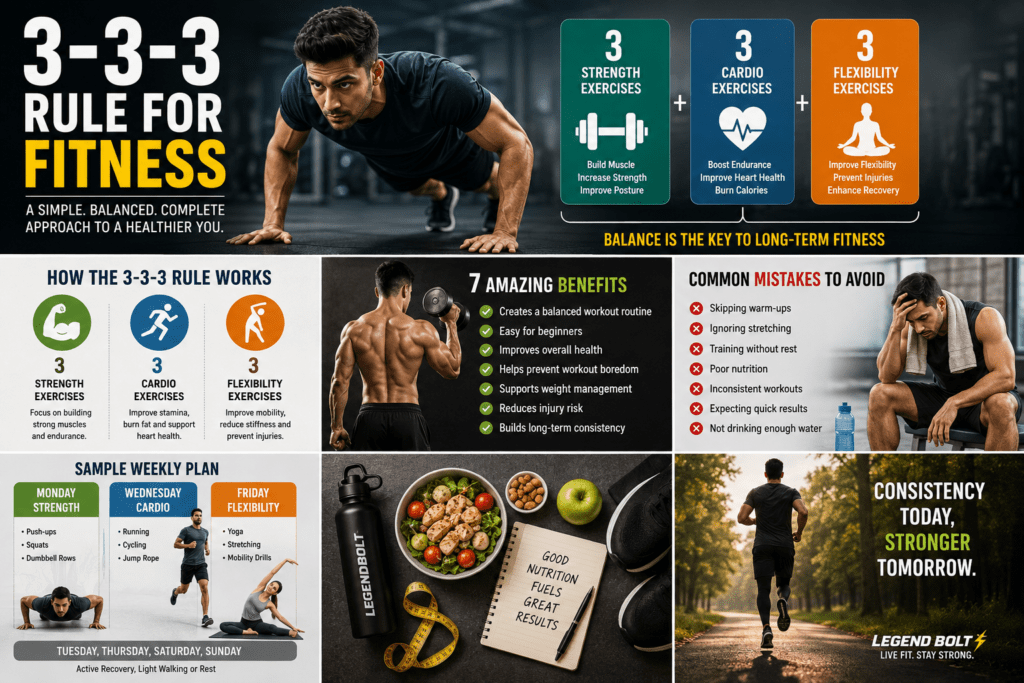
Table of Contents
- What Is the 3-3-3 Rule for Fitness?
- How Does the 3-3-3 Rule Work?
- Why Is It Effective?
- 7 Amazing Benefits of the 3-3-3 Rule for Fitness
- Common Mistakes to Avoid
- FAQs
- Final Thoughts
What Is the 3-3-3 Rule for Fitness?
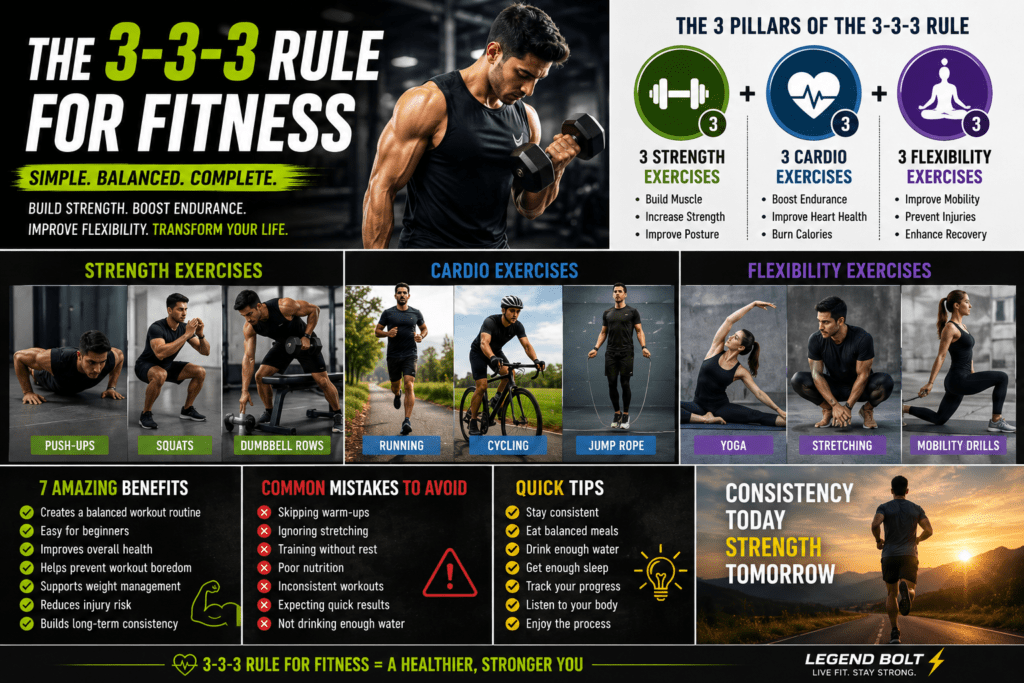
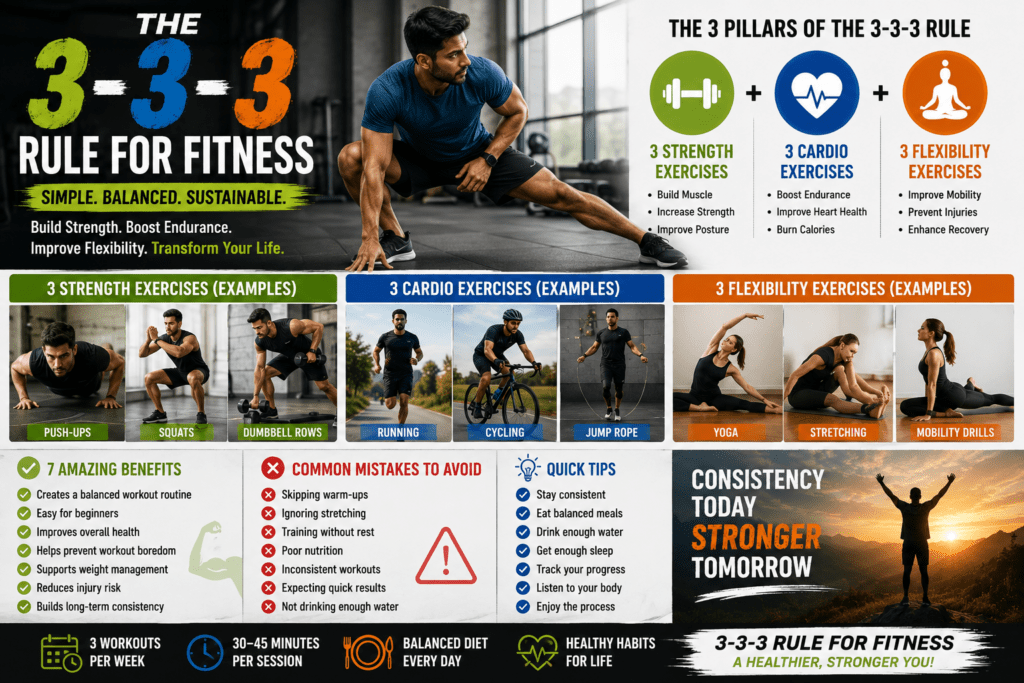
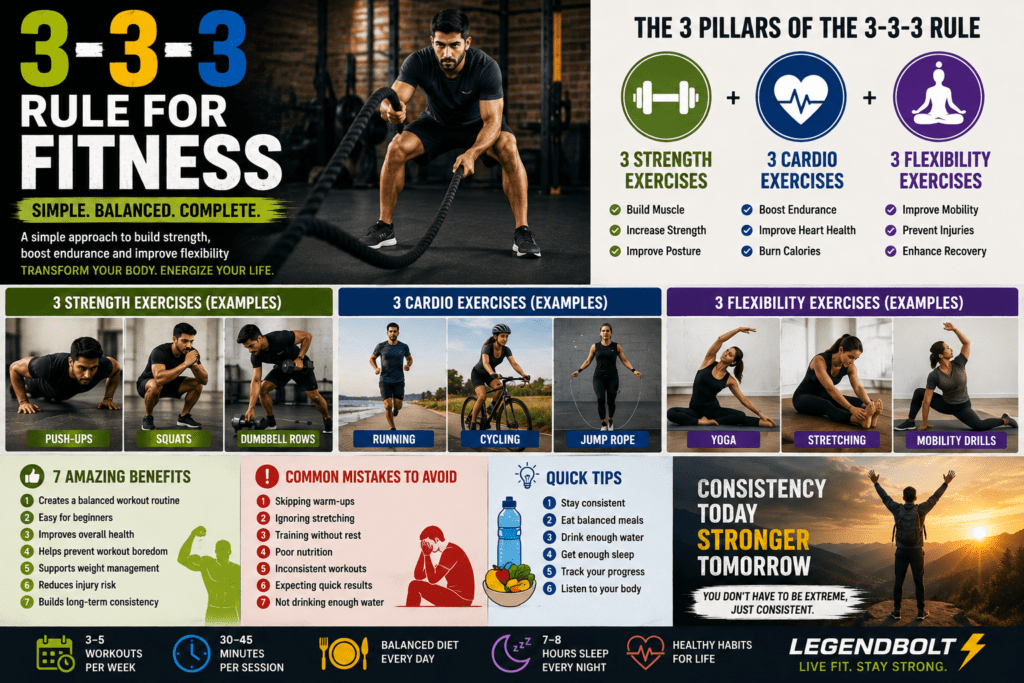
The 3-3-3 Rule for Fitness is a balanced workout strategy that focuses on three essential areas of fitness:
- 3 Strength Exercises
- 3 Cardio Exercises
- 3 Flexibility or Mobility Exercises
Instead of spending hours in the gym or following complicated workout schedules, this method encourages a complete fitness routine that targets the entire body.
For example, your weekly routine may look like this:
Strength Exercises
- Push-ups
- Squats
- Dumbbell Rows
Cardio Exercises
- Running
- Cycling
- Jump Rope
Flexibility Exercises
- Yoga
- Stretching
- Mobility Drills
This combination develops overall fitness while reducing the chances of muscle imbalance and overtraining.
How Does the 3-3-3 Rule for Fitness Work?
One reason the 3-3-3 Rule for Fitness is gaining popularity is its simplicity.
Instead of focusing only on weight training or only on cardio, it creates balance.
Here’s how each part contributes to better fitness.
1. Strength Training
Strength exercises help build muscle, improve posture, and increase metabolism.
Examples include:
- Squats
- Push-ups
- Lunges
- Deadlifts
- Bench Press
- Pull-ups
Building strength also supports everyday activities like lifting objects, climbing stairs, and maintaining healthy joints.
2. Cardio Training
Cardiovascular exercises improve heart health and increase stamina.
Popular cardio workouts include:
- Brisk walking
- Running
- Cycling
- Swimming
- Rowing
- Jump rope
Cardio also helps burn calories and supports healthy weight management.
3. Flexibility and Mobility
Many people skip stretching, but flexibility is just as important as strength.
Benefits include:
- Better movement
- Improved posture
- Reduced muscle tightness
- Lower injury risk
- Faster recovery
Activities like yoga and mobility exercises keep your body moving efficiently.
Why Is the 3-3-3 Rule for Fitness Effective?
Unlike extreme workout programs, the 3-3-3 Rule for Fitness focuses on long-term consistency.
Many beginners quit because their workout plans are too difficult.
This method solves that problem by encouraging manageable workouts that target every important aspect of fitness.
It also helps create healthy habits that are easier to maintain over time.
Whether your goal is weight loss, muscle building, improved endurance, or simply staying active, this approach provides a balanced foundation.
7 Amazing Benefits of the 3-3-3 Rule for Fitness
1. Creates a Balanced Workout Routine
One of the biggest advantages of the 3-3-3 Rule for Fitness is balance.
Instead of training only one area, it combines strength, cardio, and flexibility into a complete routine.
This improves overall physical fitness while reducing the risk of neglecting important muscle groups.
2. Easy for Beginners
Many fitness programs are designed for experienced athletes.
The 3-3-3 Rule for Fitness is beginner-friendly because it focuses on simple exercises that almost anyone can perform.
You don’t need expensive equipment or advanced training experience.
Consistency matters more than perfection.
3. Improves Overall Health
Following the 3-3-3 Rule for Fitness regularly may help improve:
- Heart health
- Muscle strength
- Joint mobility
- Body posture
- Energy levels
- Mental well-being
Regular exercise also supports better sleep and reduces stress.
4. Helps Prevent Workout Boredom
Doing the same workout every day becomes repetitive.
By combining different types of exercises, the 3-3-3 Rule for Fitness keeps workouts enjoyable and engaging.
You’ll look forward to training instead of feeling forced to exercise.
5. Supports Weight Management
A combination of strength training and cardio helps burn calories while preserving lean muscle mass.
Muscle tissue burns more calories than fat, making strength training an important part of long-term weight management.
Adding flexibility exercises also improves movement quality during workouts.
6. Reduces Injury Risk
Training only one type of exercise can create muscle imbalances.
The 3-3-3 Rule for Fitness encourages balanced movement, helping reduce stress on joints and muscles.
Stretching and mobility work also prepare the body for exercise and improve recovery afterward.
7. Builds Long-Term Consistency
The greatest benefit of the 3-3-3 Rule for Fitness is that it encourages sustainable habits.
Fitness is not about following a difficult routine for one month.
It is about creating healthy habits you can maintain for years.
Simple routines are easier to follow, making long-term success much more likely.
Common Mistakes People Make
Although the 3-3-3 Rule for Fitness is simple, many people still make mistakes that slow their progress.
Some of the most common mistakes include:
- Skipping warm-ups
- Ignoring stretching exercises
- Training without proper recovery
- Poor nutrition
- Inconsistent workouts
- Expecting quick results
- Not drinking enough water
Avoiding these mistakes helps you get the maximum benefits from your fitness routine.
Sample Weekly 3-3-3 Rule for Fitness Plan
One of the biggest advantages of the 3-3-3 Rule for Fitness is its flexibility. Whether you exercise at home, in a gym, or outdoors, you can easily adjust this routine to match your fitness level and schedule.
Here’s a beginner-friendly weekly plan:
Monday – Strength Training
- Push-ups – 3 sets
- Bodyweight Squats – 3 sets
- Dumbbell Rows – 3 sets
Wednesday – Cardio Training
- 20–30 minutes brisk walking
- Cycling
- Jump rope
Friday – Flexibility & Mobility
- Full-body stretching
- Yoga
- Hip and shoulder mobility exercises
On the remaining days, you can enjoy light walking, active recovery, or complete rest depending on your body’s needs.
Following this simple routine makes the 3-3-3 Rule for Fitness easy to maintain throughout the year.
Who Should Follow the 3-3-3 Rule for Fitness?
The 3-3-3 Rule for Fitness is suitable for almost everyone, especially those looking for a simple and balanced approach to staying active.
It is ideal for:
- Beginners starting their fitness journey
- Office workers with busy schedules
- Students wanting to stay fit
- People returning to exercise after a break
- Home workout enthusiasts
- Adults aiming to improve overall health
However, if you have a medical condition, recent injury, or chronic illness, consult a healthcare professional before starting any new fitness routine.
Nutrition Tips to Support the 3-3-3 Rule for Fitness
Exercise alone isn’t enough. Your body also needs proper nutrition to recover, build strength, and maintain energy levels.
To get the best results from the 3-3-3 Rule for Fitness, focus on eating balanced meals that include:
Protein Sources
- Eggs
- Chicken
- Fish
- Paneer
- Tofu
- Lentils
Healthy Carbohydrates
- Brown rice
- Oats
- Sweet potatoes
- Whole-grain bread
Healthy Fats
- Almonds
- Walnuts
- Avocados
- Olive oil
Fruits and Vegetables
- Bananas
- Apples
- Berries
- Spinach
- Broccoli
- Carrots
Drink enough water throughout the day to stay hydrated and support muscle recovery.
Can You Follow the 3-3-3 Rule for Fitness at Home?
Absolutely.
One of the best things about the 3-3-3 Rule for Fitness is that you don’t need an expensive gym membership.
A simple home workout can include:
Strength
- Push-ups
- Squats
- Lunges
Cardio
- High knees
- Jumping jacks
- Stair climbing
Flexibility
- Yoga stretches
- Hamstring stretches
- Shoulder mobility exercises
Even 30–45 minutes of consistent exercise several times a week can make a noticeable difference.
Final Thoughts
The 3-3-3 Rule for Fitness is an excellent way to build a balanced and sustainable fitness routine. Instead of focusing on just one type of exercise, it combines strength training, cardio, and flexibility to improve your overall health and performance.
Remember that fitness is a long-term journey. You don’t need complicated workout plans or expensive equipment to stay healthy. What matters most is showing up consistently, eating nutritious foods, staying hydrated, and allowing your body enough time to recover.
At Legendbolt, we believe fitness should be simple, enjoyable, and sustainable. Whether you’re a beginner or someone returning to an active lifestyle, the Fitness can help you develop healthy habits that last for years. Start small, stay consistent, and celebrate every step of your fitness journey.
Frequently Asked Questions (FAQs)
1. What is the 3-3-3 Rule for Fitness?
The Fitness is a simple workout approach that combines 3 strength exercises, 3 cardio exercises, and 3 flexibility or mobility exercises to create a balanced fitness routine. It is designed to improve overall health, strength, endurance, and flexibility.
2. Is the 3-3-3 Rule for Fitness good for beginners?
Yes. The 3-3-3 Rule for Fitness is beginner-friendly because it focuses on simple exercises that can be performed at home or in the gym. It helps beginners build consistency without following complicated workout plans.
3. Can I lose weight with the 3-3-3 Rule for Fitness?
The 3-3-3 Rule for Fitness can support weight loss when combined with a healthy diet and regular physical activity. Strength training, cardio, and proper nutrition work together to improve fitness and help manage body weight.
4. How many days a week should I follow the 3-3-3 Rule for Fitness?
Most people can follow this Fitness three to five days per week, depending on their fitness level, goals, and recovery needs. Consistency is more important than exercising every day.
5. Do I need gym equipment for the 3-3-3 Rule for Fitness?
No. The 3-3-3 Rule for Fitness can be followed using bodyweight exercises such as push-ups, squats, lunges, jumping jacks, walking, and stretching, making it perfect for home workouts.
6. What are the biggest mistakes people make with the 3-3-3 Rule for Fitness?
Common mistakes include skipping warm-ups, ignoring stretching, poor nutrition, inconsistent workouts, not drinking enough water, and expecting quick results. Avoiding these mistakes helps you get the maximum benefits from this Fitness.