
Whether you’re training for a marathon, building muscle in the gym, or competing at a professional level, proper nutrition plays a major role in your performance. Along with a balanced diet, many athletes choose supplements to support recovery, increase strength, and improve endurance. However, with thousands of products available, it’s natural to wonder which are actually worth using.
The best supplements for athletes are those that are supported by scientific research and used to complement a healthy diet—not replace it. While supplements can help fill nutritional gaps and support training, they cannot make up for poor eating habits, lack of sleep, or inconsistent workouts.
Choosing the right supplement depends on several factors, including your sport, training intensity, age, diet, and personal fitness goals. Some athletes may benefit from protein supplements, while others may need additional vitamins or electrolytes. There is no single supplement that works best for everyone.
In this complete guide, we’ll explore the best supplements for athletes, explain how they work, discuss their benefits and possible risks, and help you make informed decisions for your fitness journey.
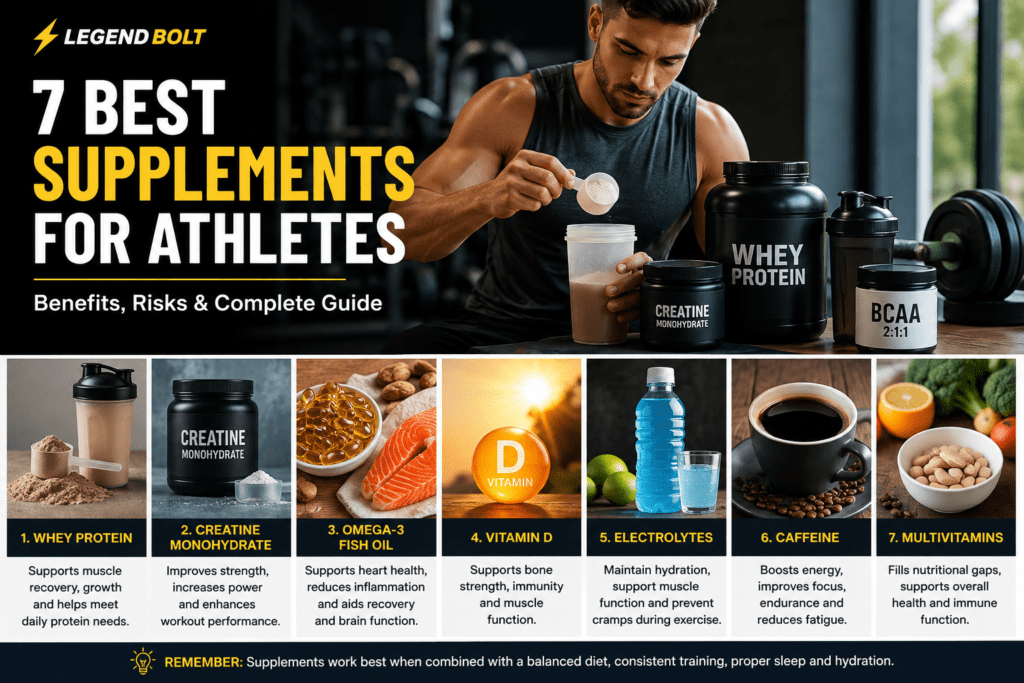
Table of Contents
- What Are Sports Supplements?
- Do Athletes Really Need Supplements?
- 7 Best Supplements for Athletes
- Benefits of Sports Supplements
- Common Mistakes Athletes Make
- FAQs
- Final Thoughts
What Are Sports Supplements?
Sports supplements are products designed to support athletic performance, muscle recovery, endurance, strength, or overall health. They are available as powders, capsules, tablets, drinks, and gummies.
Many athletes use supplements to help meet their nutritional needs, especially during periods of intense training. However, the best supplements for athletes should always be viewed as an addition to a balanced diet rather than a replacement for whole foods.
Whole foods such as lean protein, whole grains, fruits, vegetables, healthy fats, and dairy products provide a wide range of nutrients that supplements alone cannot fully replace. Supplements are most effective when they are used to fill specific nutritional gaps or support particular performance goals.
Do Athletes Really Need Supplements?
The simple answer is not always.
Many athletes can meet their nutritional requirements through a well-balanced diet. If you regularly consume enough protein, carbohydrates, healthy fats, vitamins, and minerals, you may not need many supplements.
However, the best supplements for athletes can be helpful in situations such as:
- High-intensity training several days a week
- Difficulty meeting daily protein requirements
- Nutrient deficiencies confirmed by medical tests
- Vegetarian or vegan diets
- Long endurance events
- Increased recovery demands after intense exercise
Before taking any supplement, consult a qualified healthcare professional or sports dietitian to determine whether it’s appropriate for your needs.
7 Best Supplements for Athletes
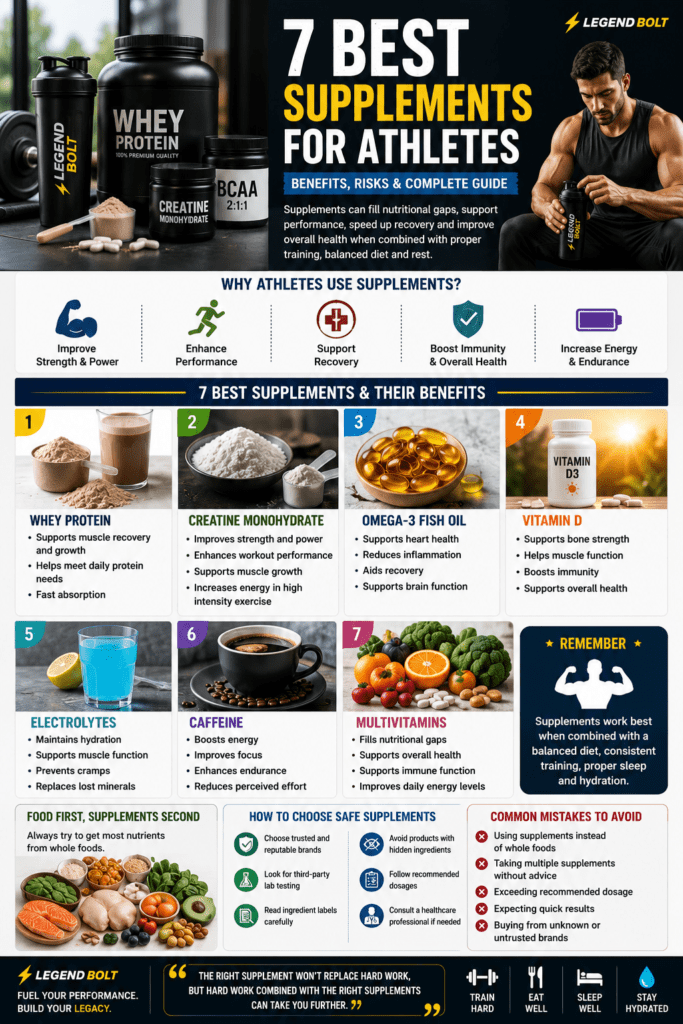
The following supplements have the strongest scientific evidence for supporting athletic performance when used correctly.
1. Whey Protein
Among the best supplements for athletes, whey protein remains one of the most popular options because it provides all the essential amino acids needed for muscle repair and growth. It is quickly absorbed, making it an excellent choice after training sessions.
Benefits:
- Supports muscle recovery
- Promotes lean muscle growth
- Helps meet daily protein needs
- Convenient after workouts
- Supports strength gains with resistance training
Whole-food alternatives include eggs, chicken, fish, paneer, tofu, Greek yogurt, and lentils.
2. Creatine Monohydrate
Creatine is one of the most researched and trusted sports supplements available today.
It helps your muscles produce energy during high-intensity exercise such as sprinting, weightlifting, and explosive sports.
Benefits of Creatine
- Improves strength
- Increases power output
- Supports muscle growth
- Enhances workout performance
- Helps recovery between intense training sessions
For most healthy adults, creatine monohydrate is considered safe when used in recommended amounts.
3. Omega-3 Fish Oil
Omega-3 fatty acids play an important role in heart health, brain function, and recovery.
Athletes often experience muscle soreness and inflammation after intense exercise. Omega-3 supplements may help support recovery and overall wellness.
Benefits of Omega-3
- Supports heart health
- May reduce exercise-related inflammation
- Promotes brain function
- Supports joint health
- Aids overall recovery
People who regularly eat fatty fish such as salmon or sardines may already get enough omega-3 through their diet.
4. Vitamin D
Vitamin D is essential for strong bones, muscle function, and immune health.
Many people have low vitamin D levels, especially those who spend most of their time indoors.
Benefits of Vitamin D
- Supports bone strength
- Helps muscle function
- Supports immunity
- Works with calcium for healthy bones
Vitamin D supplements should ideally be taken only if recommended after a blood test or medical advice.
5. Electrolyte Supplements
During long workouts or hot weather, athletes lose minerals such as sodium, potassium, and magnesium through sweat.
Electrolyte drinks or tablets help replace these minerals and maintain proper hydration.
Benefits of Electrolytes
- Maintain hydration
- Prevent dehydration
- Support muscle function
- Reduce cramp risk during prolonged exercise
- Improve endurance during long training sessions
For shorter workouts, plain water is often enough. Electrolyte supplements are generally more useful for extended or high-intensity activities.
6. Caffeine
Caffeine is one of the most widely used performance-enhancing supplements.
It can improve alertness, reduce perceived fatigue, and help athletes train harder during workouts.
Benefits of Caffeine
- Improves focus
- Increases energy
- Enhances endurance
- May improve reaction time
- Helps reduce tiredness during exercise
However, too much caffeine can cause nervousness, sleep problems, rapid heartbeat, or digestive discomfort. It should be used responsibly.
7. Multivitamins
Multivitamins provide a combination of essential vitamins and minerals.
They are not a replacement for healthy eating but may be useful for athletes who have specific nutrient deficiencies or limited diets.
Benefits of Multivitamins
- Help fill nutritional gaps
- Support immune function
- Promote overall health
- Support energy metabolism
A balanced diet should remain your primary source of nutrients whenever possible.
Benefits of the Best Supplements for Athletes
When used correctly, the best supplements for athletes may provide several advantages, including:
- Better muscle recovery
- Improved workout performance
- Increased strength
- Enhanced endurance
- Better hydration
- Reduced nutritional deficiencies
- Support for long-term health
Remember that supplements work best when combined with proper training, quality sleep, and a nutritious diet—not as a substitute for them.
Common Mistakes Athletes Make When Using Supplements
Even the best supplements for athletes won’t deliver results if they’re used incorrectly. Many athletes spend money on expensive products without understanding how or when to take them. Instead of improving performance, these mistakes can slow progress or even affect overall health.
One of the biggest mistakes is believing that supplements can replace healthy meals. Supplements are designed to support a balanced diet, not replace it. Whole foods provide protein, carbohydrates, healthy fats, vitamins, minerals, and fibre that your body needs every day.
Another common mistake is taking multiple supplements at the same time without professional advice. More isn’t always better. Taking unnecessary products may increase costs without providing additional benefits.
Many athletes also ignore the recommended serving size. Consuming more protein powder or creatine than required won’t automatically build more muscle. Your body can only use a certain amount effectively, while excessive intake may simply go to waste.
Buying supplements from unknown brands is another risk. Always choose products from trusted companies that follow quality testing and transparent labeling. This helps reduce the chance of contamination or misleading ingredient claims.
Finally, many athletes expect instant results. Supplements are not magic products. They work best when combined with regular training, quality sleep, proper hydration, and a nutritious diet.
How to Choose the Best Supplements for Athletes
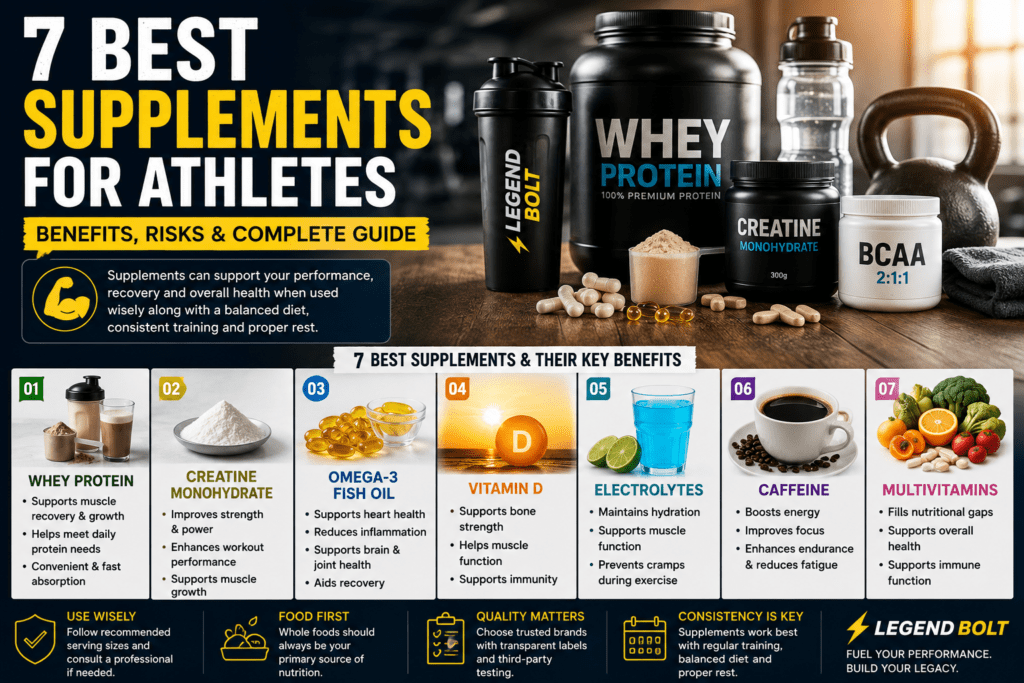
With so many options available, choosing the best supplements for athletes can feel overwhelming. Instead of buying the newest product on social media, focus on quality, safety, and your personal fitness goals.
Keep these tips in mind:
- Buy supplements from trusted and reputable brands.
- Read the ingredient list carefully.
- Avoid products with unrealistic performance claims.
- Check the expiry date before purchasing.
- Consult a healthcare professional or sports dietitian if you have medical conditions.
- Choose supplements that match your training goals rather than following trends.
A well-informed decision is always better than buying a product simply because it is popular.
Natural Food Alternatives to Supplements
Although the best supplements for athletes can be helpful, many important nutrients can also be obtained from everyday foods.
Protein Sources
- Chicken
- Eggs
- Fish
- Paneer
- Greek yogurt
- Lentils
- Tofu
Healthy Carbohydrates
- Brown rice
- Oats
- Sweet potatoes
- Whole wheat bread
- Quinoa
Healthy Fats
- Almonds
- Walnuts
- Chia seeds
- Flaxseeds
- Olive oil
Vitamins and Minerals
- Spinach
- Broccoli
- Carrots
- Bananas
- Oranges
- Berries
Eating a variety of whole foods not only provides essential nutrients but also supports long-term health and athletic performance.
Final Thoughts
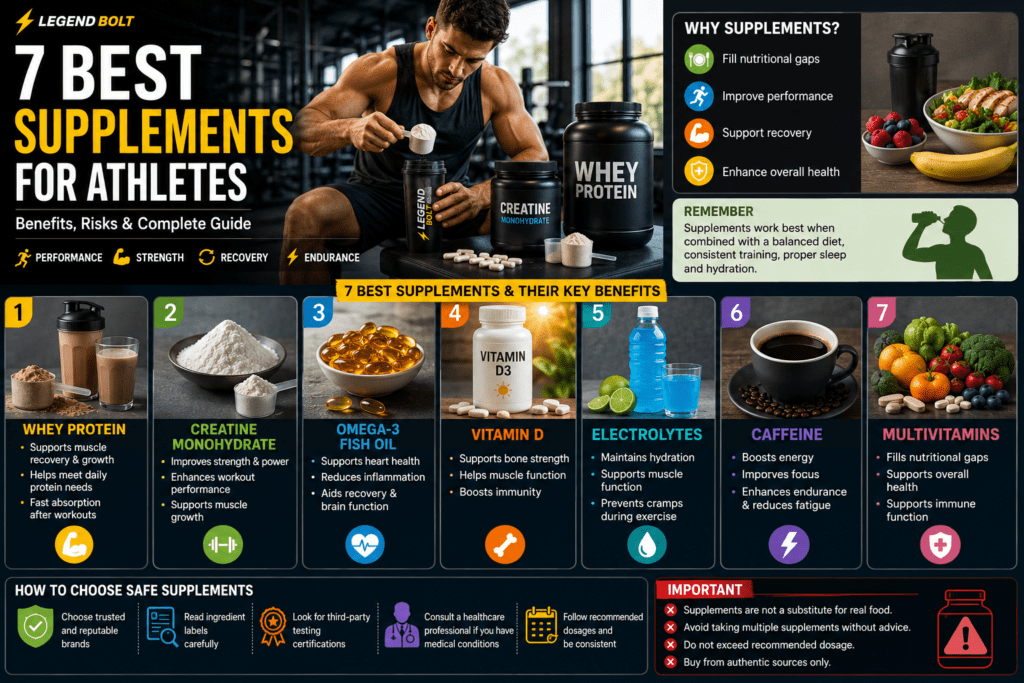
Choosing the best supplements for athletes isn’t about finding a miracle product. It’s about understanding what your body needs and using supplements wisely to support a healthy lifestyle. A balanced diet, consistent training, proper hydration, quality sleep, and adequate recovery will always have the greatest impact on athletic performance.
Supplements such as whey protein, creatine, omega-3, vitamin D, electrolytes, caffeine, and multivitamins can be valuable when used correctly and for the right reasons. However, they should always complement a nutritious diet rather than replace it.
At Legendbolt, we believe every athlete deserves reliable fitness information that supports long-term success. Focus on building healthy habits first, choose supplements carefully, and remember that consistent effort will always produce better results than quick fixes.
Frequently Asked Questions
1. What are the best supplements for athletes?
The best supplements for athletes commonly include whey protein, creatine monohydrate, omega-3 fish oil, vitamin D, electrolyte supplements, caffeine, and multivitamins when needed. The right choice depends on your diet, training intensity, and fitness goals.
2. Do all athletes need supplements?
No. Many athletes can meet their nutritional needs through a balanced diet. The best supplements for athletes are most useful when there are nutrient deficiencies, increased training demands, or difficulty meeting daily nutritional requirements.
3. Is whey protein safe for athletes?
Yes. Whey protein is considered one of the best supplements for athletes and is generally safe for healthy individuals when consumed in recommended amounts as part of a balanced diet.
4. Can supplements improve sports performance?
Some of the best supplements for athletes, such as creatine and caffeine, may improve performance when combined with proper training, nutrition, and recovery. However, supplements cannot replace hard work and consistent exercise.
5. Are natural foods better than supplements?
In most cases, yes. Whole foods provide a wider range of nutrients than supplements. The best supplements for athletes should only be used to support a healthy diet, not replace it.
6. How do I choose safe sports supplements?
Choose the best supplements for athletes from reputable brands with transparent ingredient labels and quality testing. If you’re unsure, seek advice from a healthcare professional or sports nutrition expert before using any supplement.