
Finding time to exercise can be difficult, especially if you have a busy schedule. Between work, studies, family responsibilities, and daily commitments, spending an hour at the gym isn’t always possible. The good news is that you don’t need long workouts to improve your health. A well-planned 20-Minute Workout can help you burn calories, build strength, improve endurance, and boost your overall fitness.
Many people believe longer workouts always produce better results. However, consistency matters far more than workout duration. A focused 20-Minute Workout performed regularly is often more effective than occasional two-hour gym sessions. Whether you’re a beginner starting your fitness journey or an experienced athlete looking for a quick training session, this workout approach can fit easily into your daily routine.
In this guide, you’ll learn what a 20-Minute Workout is, why it works, its biggest benefits, who should try it, and how to build an effective routine that supports your fitness goals.
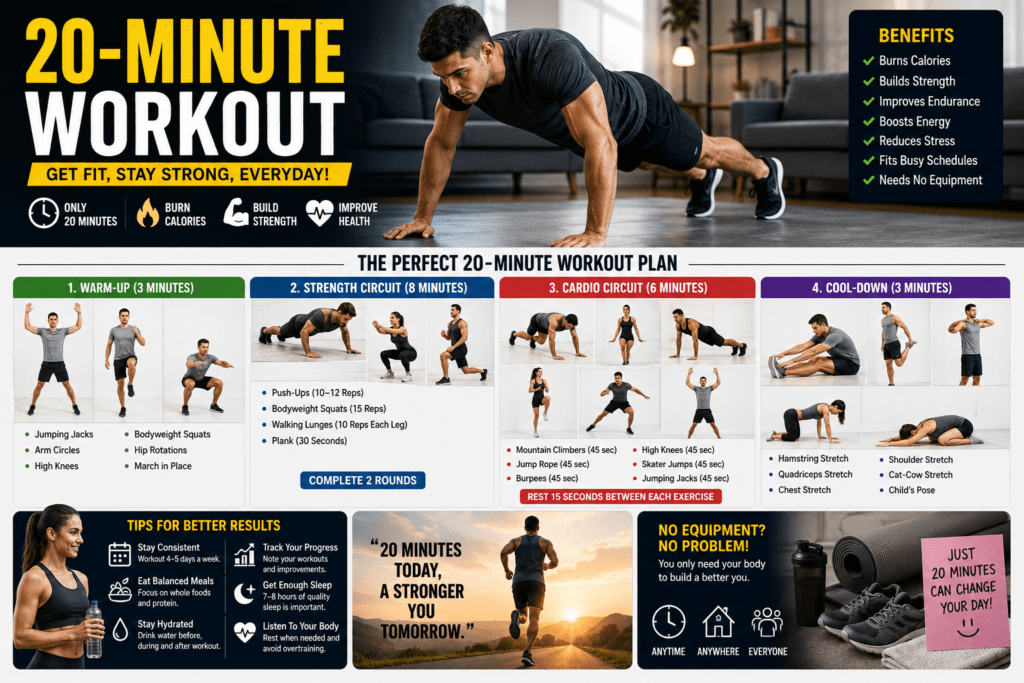
What Is a 20-Minute Workout?
A 20-Minute Workout is a short but structured exercise session designed to maximize results in a limited amount of time. Instead of spending hours exercising, you focus on high-quality movements that target multiple muscle groups while keeping your heart rate elevated.
A typical 20-Minute Workout includes four key components:
- A quick warm-up
- Strength exercises
- Cardio movements
- Cool-down stretches
Because the workout combines different types of exercise, it helps improve cardiovascular fitness, muscular strength, flexibility, and calorie burning in a single session.
This approach is popular among beginners, office workers, students, and even professional athletes who need efficient training sessions on busy days.
Can a 20-Minute Workout Really Be Effective?
One of the most common questions people ask is whether a 20-Minute Workout is enough to stay fit.
The answer is yes—if the workout is planned correctly and performed consistently.
During a focused workout, your body works continuously with minimal rest. Compound exercises such as squats, push-ups, lunges, and burpees engage multiple muscle groups at the same time, making your session more efficient than isolated exercises.
A 20-Minute Workout also encourages consistency. Since it requires less time, people are more likely to stick with the routine for months instead of giving up after a few weeks.
Remember, fitness isn’t about exercising for the longest time possible. It’s about building healthy habits you can maintain for years.
Who Should Try a 20-Minute Workout?
One of the biggest advantages of a 20-Minute Workout is that almost anyone can follow it.
It is especially suitable for:
Beginners
If you’re just starting your fitness journey, shorter workouts help you build confidence without feeling overwhelmed.
Busy Professionals
People with demanding jobs often struggle to find time for fitness. A 20-Minute Workout easily fits into a morning routine, lunch break, or evening schedule.
Students
Students balancing classes and assignments can stay active without sacrificing study time.
Parents
Parents with young children often have limited free time. Short workouts allow them to prioritize health while managing family responsibilities.
Athletes
Even experienced athletes use shorter sessions for active recovery, conditioning, or improving mobility between intense training days.
Why Consistency Is More Important Than Duration
Many people believe they need to exercise for at least an hour to see results. This misconception often discourages beginners.
The truth is that consistency always beats occasional long workouts.
For example:
- Exercising for 20 minutes five days a week equals 100 minutes of activity.
- Exercising for two hours once a week equals 120 minutes, but without the same level of routine and habit-building.
Regular movement improves your cardiovascular health, strengthens muscles, supports weight management, and boosts mental well-being over time.
A 20-Minute Workout removes one of the biggest barriers to exercise—the excuse that there isn’t enough time.
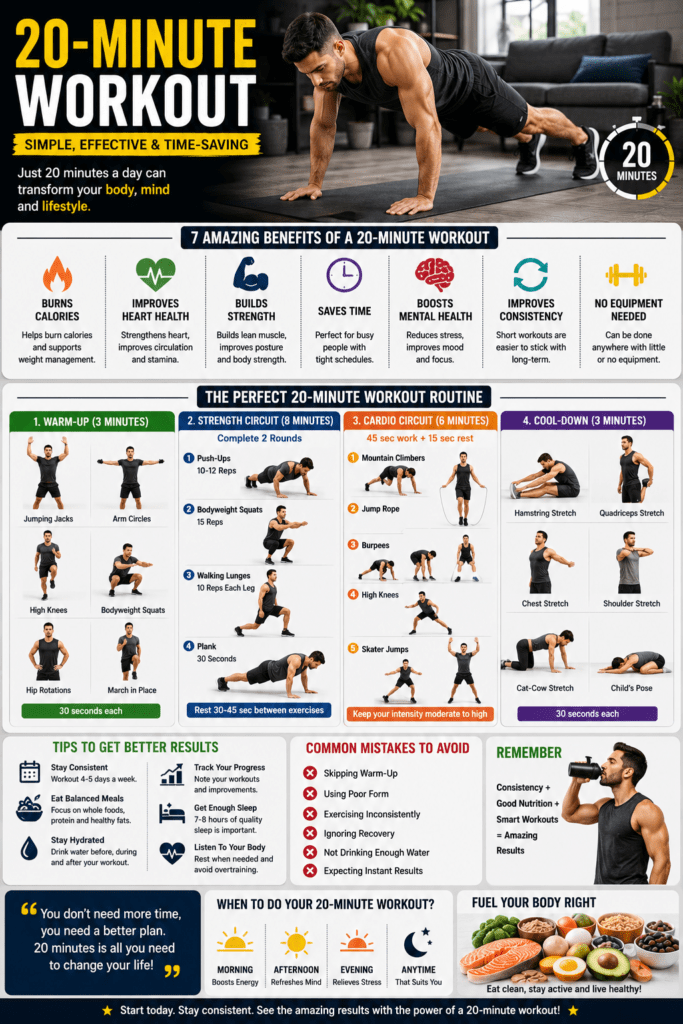
7 Amazing Benefits of a 20-Minute Workout
1. Burns Calories Efficiently
A properly planned 20-Minute Workout can burn a significant number of calories, especially when it combines strength exercises with cardio intervals.
Movements such as jumping jacks, mountain climbers, squats, and burpees increase your heart rate while activating multiple muscle groups. This helps improve calorie expenditure during and after your workout.
Although the exact number of calories burned depends on your body weight and exercise intensity, consistency plays a much bigger role than chasing a specific calorie count.
2. Improves Heart Health
Your heart is a muscle that becomes stronger with regular physical activity.
A 20-Minute Workout that includes cardio exercises such as brisk walking, jogging in place, jump rope, or high knees helps improve circulation and supports cardiovascular fitness.
Over time, regular exercise may help maintain healthy blood pressure, improve endurance, and increase energy levels throughout the day.
3. Builds Strength Without Spending Hours in the Gym
Strength training doesn’t require expensive equipment or lengthy sessions.
Bodyweight exercises like:
- Push-ups
- Squats
- Lunges
- Planks
- Glute bridges
can effectively build muscle strength when performed with proper technique.
Including these movements in your 20-Minute Workout helps improve posture, joint stability, and overall functional fitness.
4. Fits Easily Into a Busy Lifestyle
One reason many people stop exercising is because they believe they don’t have enough time.
A 20-Minute Workout solves this problem by making fitness realistic.
Instead of waiting for the “perfect time” to exercise, you can complete your workout before work, after school, during a lunch break, or even at home in your living room.
This flexibility makes it much easier to stay committed to your health goals.
5. Boosts Mental Health and Reduces Stress
Exercise doesn’t just strengthen your body—it also benefits your mind.
A regular 20-Minute Workout encourages the release of endorphins, often called the body’s “feel-good” chemicals. These natural chemicals can help improve mood, reduce stress, and increase feelings of well-being.
Many people also notice improved focus and productivity after exercising, making short workouts a great way to refresh your mind during a busy day.
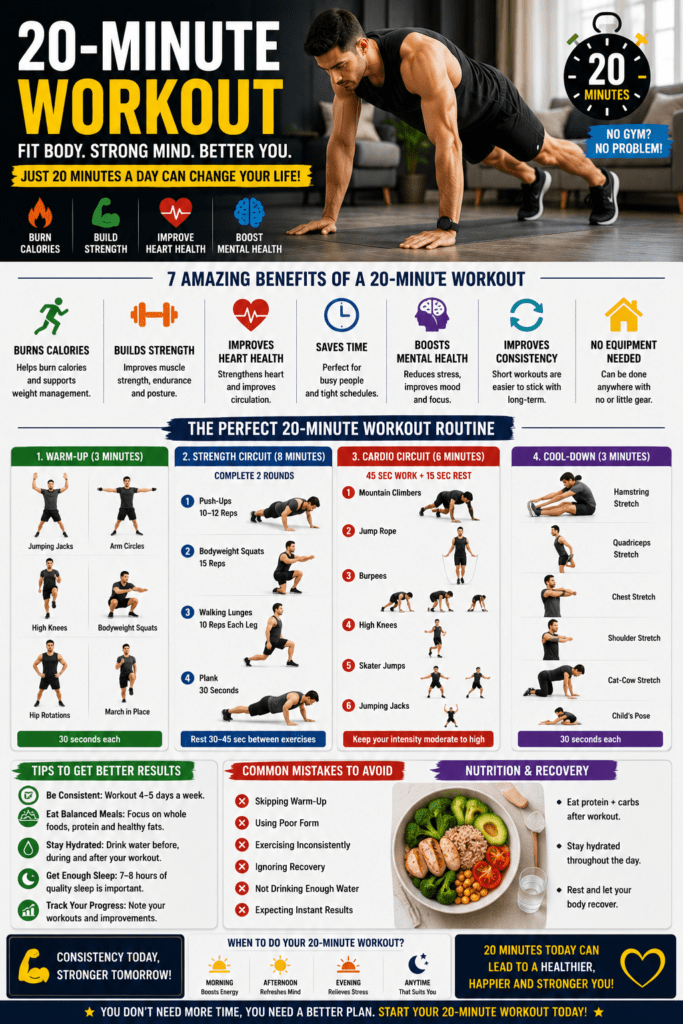
6. Encourages Long-Term Consistency
The best workout is the one you can continue doing.
Because a 20-Minute Workout is simple and time-efficient, it’s easier to turn into a daily habit.
Rather than feeling overwhelmed by long gym sessions, you’ll be more likely to stay consistent week after week. Small, consistent efforts often lead to better long-term results than occasional intense workouts.
7. Requires Little or No Equipment
Another major benefit of a 20-Minute Workout is that you don’t need an expensive gym membership or fancy equipment.
Many effective exercises use only your body weight, making them perfect for home workouts, travel, or outdoor training.
Simple equipment such as resistance bands or a pair of dumbbells can add variety, but they are optional rather than essential.
The Best 20-Minute Workout Routine
Now that you know the benefits of a 20-Minute Workout, it’s time to put it into practice. This beginner-friendly routine targets your entire body while improving strength, endurance, and mobility. You can perform it at home with little or no equipment.
Warm-Up (3 Minutes)
Never skip your warm-up. It prepares your muscles, increases blood flow, and helps reduce the risk of injury.
Perform each exercise for 30 seconds:
- Jumping Jacks
- Arm Circles
- High Knees
- Bodyweight Squats
- Hip Rotations
- March in Place
Take deep breaths and move at a comfortable pace.
Strength Circuit (8 Minutes)
Complete 2 rounds of the following exercises.
Push-Ups – 10 to 12 Repetitions
Push-ups strengthen your chest, shoulders, arms, and core.
If you’re a beginner, perform knee push-ups until you build more strength.
Bodyweight Squats – 15 Repetitions
Squats strengthen your legs, glutes, and core while improving balance and mobility.
Keep your chest up and lower yourself as if you’re sitting in a chair.
Walking Lunges – 10 Repetitions Per Leg
Lunges improve lower-body strength and stability.
Take controlled steps and keep your knees aligned with your toes.
Plank – 30 Seconds
The plank strengthens your core, shoulders, and lower back.
Maintain a straight line from your head to your heels without letting your hips drop.
Cardio Circuit (6 Minutes)
Perform each movement for 45 seconds, followed by 15 seconds of rest.
- Mountain Climbers
- Jump Rope (or imaginary jump rope)
- Burpees
- High Knees
- Skater Jumps
- Jumping Jacks
Adjust the intensity based on your fitness level. Beginners can slow down the pace, while advanced individuals can increase speed and effort.
Cool-Down (3 Minutes)
Cooling down allows your heart rate to return to normal and helps improve flexibility.
Spend about 30 seconds on each stretch:
- Hamstring Stretch
- Quadriceps Stretch
- Chest Stretch
- Shoulder Stretch
- Cat-Cow Stretch
- Child’s Pose
Take slow, deep breaths during each stretch and avoid bouncing.
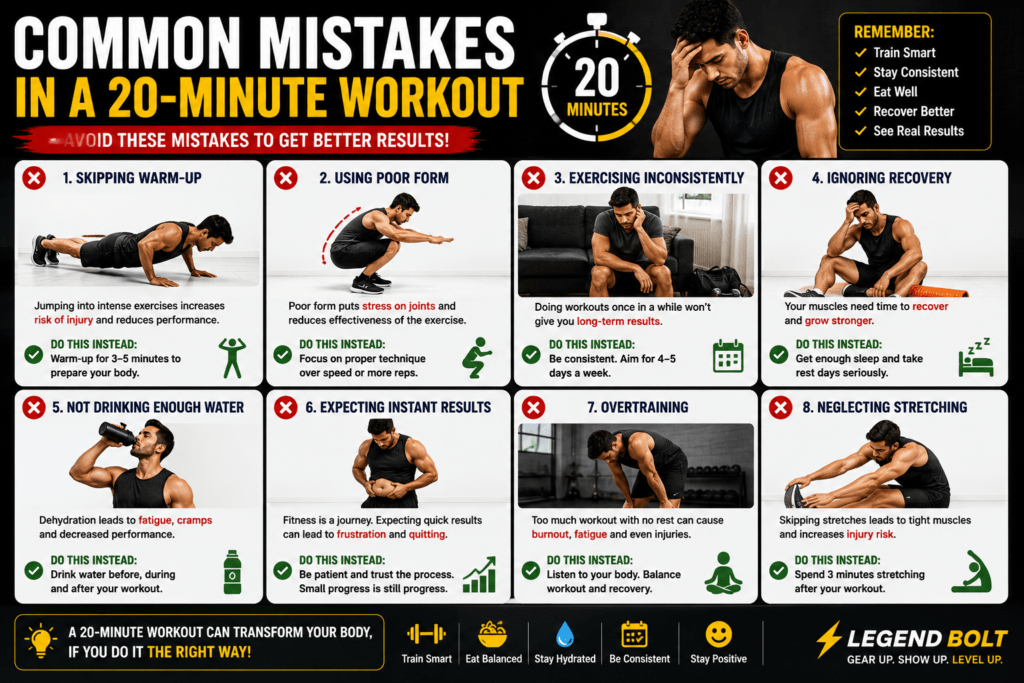
Common 20-Minute Workout Mistakes
Even a well-designed 20-Minute Workout can be less effective if you make common mistakes. Avoid these habits to get the best results.
Skipping the Warm-Up
Starting intense exercise without warming up increases the risk of muscle strain and injury.
Using Poor Form
Always prioritize proper technique over speed or the number of repetitions.
Exercising Inconsistently
Doing one workout every few weeks won’t produce lasting results. Consistency is the key to success.
Ignoring Recovery
Your muscles need time to recover and grow. Make sure you get enough sleep and include rest days in your weekly routine.
Forgetting Hydration
Drink water before, during, and after your 20-Minute Workout, especially in hot weather or after intense exercise.
Tips to Get Better Results
If you want your 20-Minute Workout to deliver the best possible results, follow these simple tips:
- Exercise at least 4–5 days per week.
- Eat a balanced diet rich in protein, whole grains, fruits, and vegetables.
- Stay hydrated throughout the day.
- Track your progress in a notebook or fitness app.
- Gradually increase the intensity as your fitness improves.
- Listen to your body and avoid overtraining.
Remember, progress happens through consistent effort—not overnight.
Final Thoughts
A 20-Minute Workout proves that you don’t need hours in the gym to improve your fitness. With the right combination of strength exercises, cardio, and stretching, just 20 minutes a day can help you build healthier habits, increase energy, improve endurance, and support long-term well-being.
Whether you’re a beginner starting your fitness journey or someone with a busy schedule, this simple routine can fit into almost any lifestyle. The most important step is to stay consistent and focus on gradual progress rather than perfection.
At Legendbolt, we believe fitness should be simple, practical, and accessible to everyone. A well-planned 20-Minute Workout, combined with balanced nutrition, proper recovery, and regular movement, can help you achieve your fitness goals one day at a time.
Frequently Asked Questions (FAQs)
1. Is a 20-Minute Workout enough to stay fit?
Yes. A 20-Minute Workout can improve strength, cardiovascular health, endurance, and overall fitness when performed consistently and combined with a healthy diet.
2. Can a 20-Minute Workout help with weight loss?
A 20-Minute Workout can support weight loss by burning calories and increasing daily physical activity. Pair it with a calorie-controlled, balanced diet for the best results.
3. Can beginners do a 20-Minute Workout?
Absolutely. A 20-Minute Workout is ideal for beginners because it is manageable, easy to follow, and can be adjusted to suit different fitness levels.
4. Do I need equipment for a 20-Minute Workout?
No. Many 20-Minute Workout routines rely on bodyweight exercises such as squats, push-ups, lunges, planks, and jumping jacks, making them suitable for home workouts.
5. How many days a week should I do a 20-Minute Workout?
For most people, performing a 20-Minute Workout 4 to 5 days per week is enough to improve fitness while allowing time for recovery.
6. What should I eat after a 20-Minute Workout?
After a 20-Minute Workout, eat a balanced meal or snack that includes protein and healthy carbohydrates. Examples include Greek yogurt with fruit, eggs on whole-grain toast, or a protein smoothie with a banana.