
Staying hydrated is one of the simplest yet most important habits for improving athletic performance and maintaining overall health. Whether you’re a professional athlete, a weekend runner, a gym enthusiast, or someone who enjoys home workouts, drinking enough water can make a significant difference in how your body performs and recovers. Unfortunately, hydration is often overlooked compared to training plans, nutrition, and supplements.
Following the right hydration tips for athletes helps your body function efficiently before, during, and after exercise. Water plays a vital role in regulating body temperature, transporting nutrients, lubricating joints, supporting muscle contractions, and removing waste products. When your body loses too much water through sweat and those fluids are not replaced, dehydration can occur. Even mild dehydration can reduce endurance, decrease strength, slow reaction time, and increase fatigue.
Many athletes believe they only need water when they feel thirsty. However, thirst is actually one of the first signs that your body is already becoming dehydrated. Developing healthy hydration habits before thirst begins is one of the smartest ways to maintain consistent performance and reduce the risk of heat-related illnesses.
In this complete guide, you’ll learn the most effective hydration tips for athletes, understand why hydration matters, discover the benefits of staying hydrated, and find practical advice that you can apply to your daily training routine.
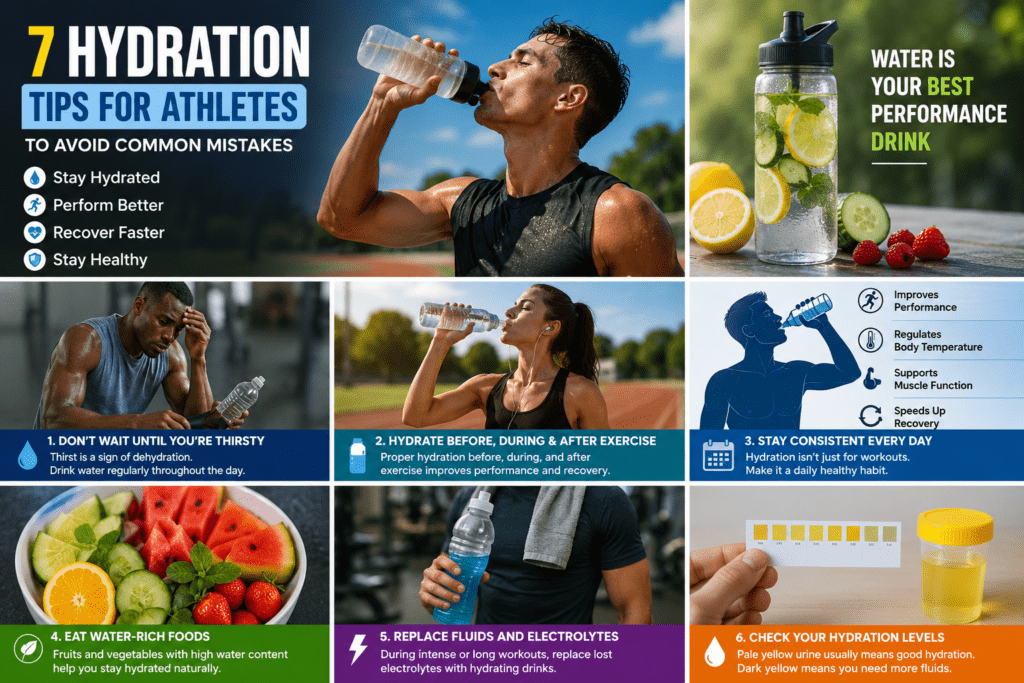
Why Are Hydration Tips for Athletes Important?
Every cell, tissue, and organ in your body relies on water to function properly. Since the human body is made up of approximately 60% water, maintaining proper hydration is essential for both everyday health and athletic performance.
Athletes lose water continuously through sweat, especially during intense exercise or outdoor training in warm weather. Sweat helps cool the body by lowering its temperature, but it also causes the loss of fluids and important electrolytes such as sodium and potassium. Without replacing these fluids, performance begins to decline.
Following proper hydration tips for athletes helps maintain energy levels, supports healthy circulation, keeps muscles functioning efficiently, and reduces the chances of cramps or overheating during exercise.
Good hydration is not only important during workouts—it also supports recovery, improves focus, and prepares your body for the next training session.
What Happens When Athletes Become Dehydrated?
Dehydration occurs when your body loses more fluids than it takes in. This imbalance affects nearly every system in your body and can reduce both physical and mental performance.
Even losing around 2% of your body weight through sweat may negatively affect endurance, coordination, and concentration.
Common signs of dehydration include:
- Feeling thirsty
- Dry mouth
- Fatigue
- Muscle cramps
- Headache
- Dizziness
- Dark yellow urine
- Faster heartbeat
- Reduced endurance
- Poor concentration
If dehydration becomes severe, it may increase the risk of heat exhaustion or heat stroke, particularly during hot weather or long training sessions.
Learning and applying proper hydration tips for athletes helps prevent these problems and allows your body to perform at its best.
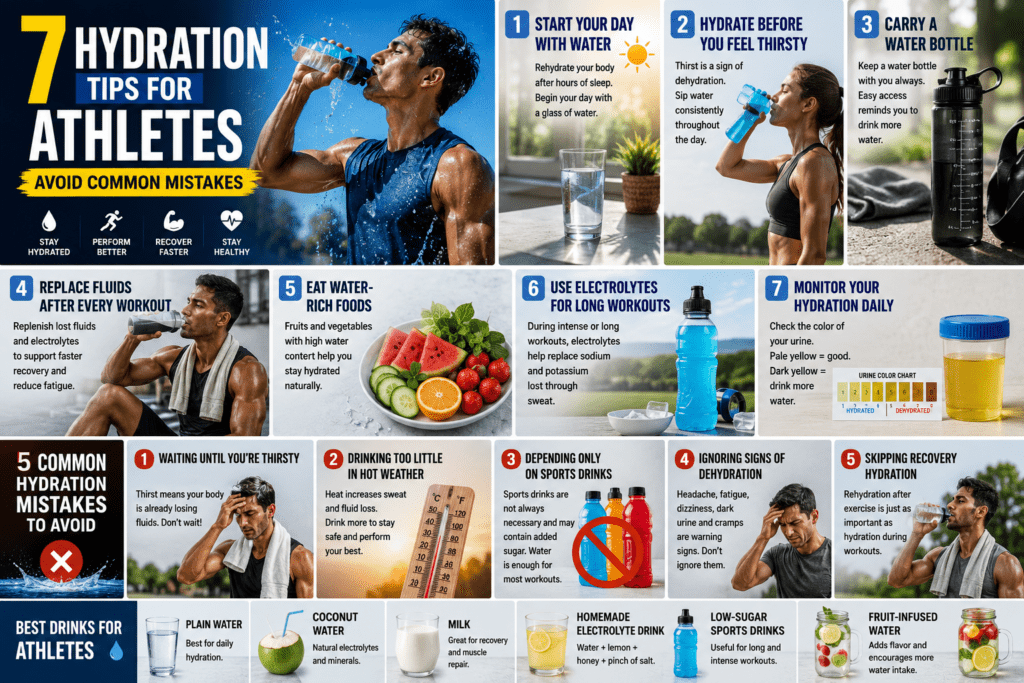
How Much Water Should Athletes Drink?
One of the most common questions athletes ask is how much water they should drink each day.
The answer depends on several factors, including:
- Body weight
- Exercise intensity
- Workout duration
- Climate
- Sweat rate
- Individual health conditions
Although hydration needs vary, these general guidelines are helpful for most active individuals.
Before Exercise
Drink 400–600 ml of water approximately 2 to 3 hours before exercising. This allows your body enough time to absorb the fluids and begin your workout well hydrated.
During Exercise
For workouts lasting longer than 30 minutes, sip 150–250 ml of water every 15–20 minutes, especially if you’re sweating heavily.
During long endurance events lasting over an hour, drinks containing electrolytes may help replace minerals lost through sweat.
After Exercise
After your workout, continue drinking water gradually to replace the fluids you’ve lost. If your session was particularly intense or performed in hot weather, combining water with electrolyte-rich foods or drinks may support faster recovery.
Monitoring your urine color is another simple way to check hydration. Pale yellow urine generally indicates that you’re well hydrated, while darker urine may suggest you need more fluids.
Water vs Sports Drinks: Which Is Better?
Many athletes wonder whether they should drink plain water or sports drinks.
For most people, water is the best choice during normal workouts lasting less than an hour. It effectively replaces lost fluids without adding unnecessary sugar or calories.
Sports drinks may become beneficial when:
- Exercising for more than 60–90 minutes.
- Training in very hot or humid conditions.
- Participating in endurance sports.
- Losing large amounts of sweat.
These drinks provide electrolytes such as sodium and potassium, which help maintain fluid balance and support muscle function during prolonged exercise.
Choosing between water and sports drinks depends on the duration and intensity of your workout rather than assuming one is always better than the other.
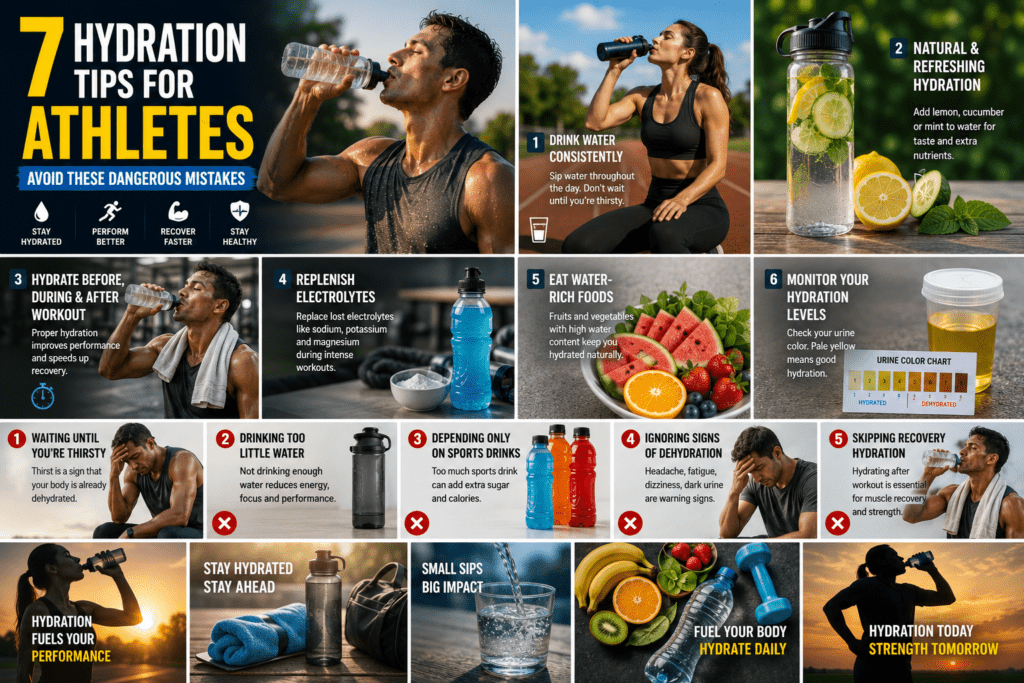
7 Benefits of Following Hydration Tips for Athletes
1. Improves Athletic Performance
One of the biggest reasons to follow proper hydration tips for athletes is improved sports performance.
When your body has enough fluids, your heart pumps blood more efficiently, muscles receive oxygen more effectively, and your energy levels remain more stable during exercise.
Athletes who stay hydrated are generally able to train longer, recover better, and maintain higher performance levels.
2. Helps Prevent Dehydration
The primary goal of following hydration tips for athletes is to prevent dehydration before it affects your performance.
Replacing fluids consistently throughout the day reduces the likelihood of fatigue, dizziness, muscle cramps, and heat-related illnesses.
Instead of waiting until you feel thirsty, develop the habit of drinking water regularly before, during, and after training.
3. Supports Healthy Muscle Function
Water plays a key role in muscle contractions and movement.
Without enough fluids, muscles may fatigue more quickly and become more prone to cramps.
Proper hydration tips for athletes help muscles work efficiently during training while supporting flexibility and reducing the risk of injuries.
4. Speeds Up Recovery
Recovery begins immediately after your workout ends.
Drinking enough water helps transport nutrients to your muscles, remove waste products, and replace fluids lost through sweat.
Following good hydration tips for athletes after exercise allows your body to recover faster and prepares you for your next workout.
5. Regulates Body Temperature
One of water’s most important jobs is helping your body stay cool.
During exercise, sweating allows heat to escape through the skin. Without enough fluids, your body struggles to regulate temperature effectively, increasing the risk of overheating.
Staying hydrated helps maintain a safe body temperature during both indoor and outdoor workouts.
6. Improves Focus and Mental Performance
Hydration doesn’t only affect your muscles—it also affects your brain.
Even mild dehydration can reduce concentration, reaction time, and decision-making ability.
Whether you’re playing cricket, football, tennis, or simply completing a gym workout, following proper hydration tips for athletes helps you stay mentally alert throughout your training session.
7. Supports Overall Health
Beyond sports performance, staying hydrated supports many essential body functions, including digestion, kidney health, joint lubrication, blood circulation, and nutrient transport.
Developing healthy hydration habits benefits not only athletes but anyone looking to improve their overall well-being and maintain an active lifestyle.
7 Smart Hydration Tips for Athletes to Stay Healthy
Knowing the right hydration tips for athletes can make a noticeable difference in your performance, recovery, and overall well-being. Staying hydrated isn’t only about drinking more water—it’s about developing healthy habits before, during, and after exercise. Here are seven practical tips that every athlete can follow.
1. Start Your Day with Water
One of the easiest hydration tips for athletes is to drink a glass of water soon after waking up. Your body naturally loses fluids while you sleep, and rehydrating in the morning helps prepare you for the day ahead.
2. Drink Water Before You Feel Thirsty
Thirst is one of the first signs that your body is already becoming dehydrated. Instead of waiting until you’re thirsty, sip water consistently throughout the day to maintain proper hydration.
3. Carry a Reusable Water Bottle
Keeping a water bottle nearby is a simple way to remind yourself to drink regularly. Whether you’re at the gym, on the sports field, or at work, easy access to water makes staying hydrated much easier.
4. Replace Fluids After Every Workout
Sweating causes your body to lose water and electrolytes. After every training session, drink enough fluids to replace what you’ve lost and support faster recovery.
5. Eat Water-Rich Foods
Hydration doesn’t come only from drinks. Fruits and vegetables such as watermelon, oranges, cucumbers, strawberries, and tomatoes contain high amounts of water and help support daily fluid intake.
6. Use Electrolytes for Long Workouts
For workouts lasting longer than 60–90 minutes, especially in hot weather, electrolyte drinks may help replace sodium and potassium lost through sweat. This supports muscle function and reduces the risk of dehydration.
7. Monitor Your Hydration Daily
One of the simplest hydration tips for athletes is checking the color of your urine. Pale yellow usually indicates good hydration, while darker urine may mean it’s time to drink more water.
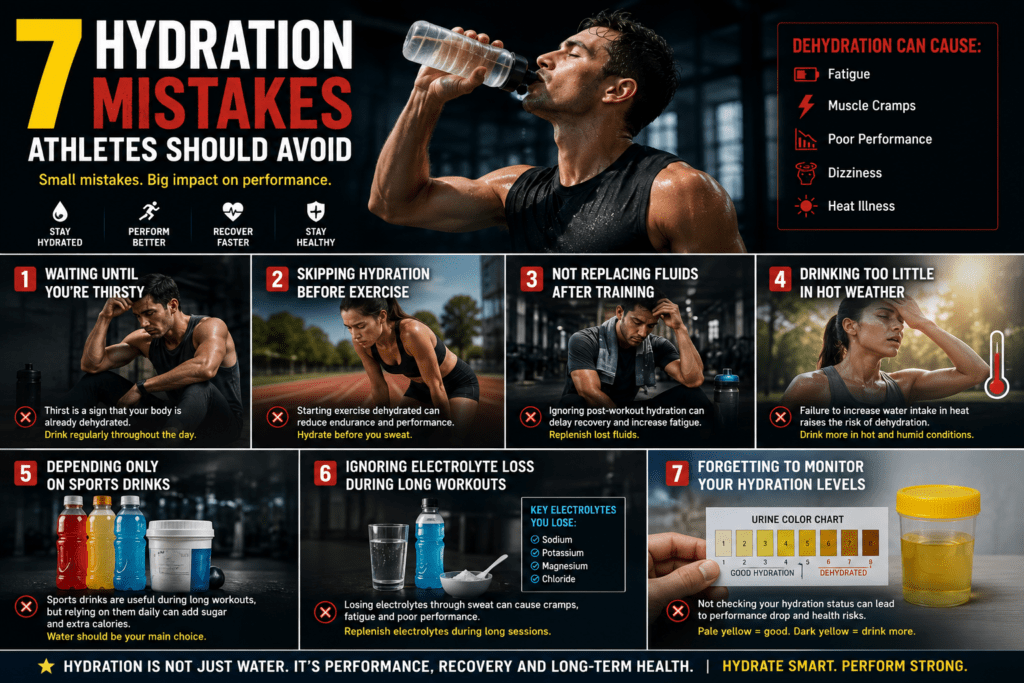
5 Common Hydration Mistakes Athletes Should Never Ignore
Even experienced athletes sometimes develop habits that increase the risk of dehydration. Avoiding these common mistakes can help you perform better and recover more effectively.
Only Drinking Water During Exercise
Many people forget that hydration starts long before a workout begins. Drink fluids throughout the day, not just while exercising.
Ignoring Early Signs of Dehydration
Headaches, fatigue, dizziness, and muscle cramps shouldn’t be ignored. These are often warning signs that your body needs more fluids.
Drinking Too Little in Hot Weather
Higher temperatures increase sweating and fluid loss. During summer or outdoor training sessions, increase your water intake accordingly.
Depending Only on Sports Drinks
Sports drinks can be useful during long workouts, but they shouldn’t replace plain water for everyday hydration. Many contain added sugar that isn’t necessary for shorter exercise sessions.
Skipping Recovery Hydration
Many athletes finish their workout and forget to rehydrate afterward. Replacing lost fluids is just as important as staying hydrated during exercise.
Best Drinks for Athletes to Stay Hydrated
Choosing the right drinks can help support hydration and recovery.
Some of the best options include:
- Plain water
- Coconut water
- Milk after training
- Homemade electrolyte drinks
- Low-sugar sports drinks (for long workouts)
- Fruit-infused water
For most daily workouts, plain water remains the best and most affordable choice.
Final Thoughts
Following the right hydration tips for athletes is one of the simplest ways to improve sports performance, support recovery, and maintain overall health. Staying hydrated helps your muscles perform efficiently, keeps your body cool during exercise, improves concentration, and reduces the risk of dehydration-related problems.
Remember that hydration isn’t something you think about only during workouts. It’s a daily habit that begins when you wake up and continues throughout the day. Drinking enough water, eating water-rich foods, and replacing fluids after exercise can make a noticeable difference in both your performance and your long-term health.
At Legendbolt, we believe that small daily habits create lasting results. By following these practical hydration tips for athletes, you can train smarter, recover faster, and stay ready to perform at your best every day.
Frequently Asked Questions (FAQs)
1. What are the best hydration tips for athletes?
The best hydration tips for athletes include drinking water before, during, and after exercise, carrying a reusable water bottle, eating water-rich foods, and replacing electrolytes after long or intense workouts.
2. Why are hydration tips for athletes important?
Following proper hydration tips for athletes helps improve endurance, supports muscle function, regulates body temperature, enhances recovery, and reduces the risk of dehydration.
3. How much water should athletes drink daily?
Hydration needs vary based on body size, activity level, weather, and sweat rate. Athletes should drink water consistently throughout the day and increase their intake during and after exercise.
4. Are sports drinks better than water?
For most workouts lasting less than an hour, water is enough. Sports drinks may be helpful during prolonged or high-intensity exercise because they replace electrolytes lost through sweat.
5. What foods help athletes stay hydrated?
Watermelon, oranges, cucumbers, strawberries, tomatoes, lettuce, and celery are excellent choices because they have a high water content and contribute to daily hydration.
6. What is the biggest hydration mistake athletes make?
One of the biggest mistakes is waiting until they feel thirsty before drinking water. Regular hydration throughout the day is much more effective than trying to catch up after dehydration has already begun.